
Therapist credentials are state licenses and certificates that confirm education, supervised clinical hours, and passed exams. The letters after a clinician's name tell you what they're legally allowed to do: master's level licenses (LPC, LMHC, LCSW, LMFT) cover talk therapy, doctorates (PhD, PsyD) add testing and assessment, and only medical prescribers and most psychiatric nurse practitioners can prescribe medication. Confirm any license through your state board before booking, and weight your decision toward fit and relevant experience over the prestige of the degree.
TL;DR:
- Confirm that licensed master’s clinicians have completed the required graduate education, supervised hours, and exams specific to their state to ensure safe care.
- Recognize that psychologist credentials (PhD or PsyD) involve testing expertise but do not authorize medication prescription in most states, unlike psychiatrists or PMHNPs.
- Verify that prescribers like psychiatrists and nurse practitioners are actively licensed and working within your state, as most cannot prescribe across state lines.
- Understand that specialty certifications, such as EMDR or RPT, require supervised hours and ongoing consultation, not just weekend workshops or short courses.
- Prioritize confirming the clinician’s license status before evaluating experience or specialty titles to ensure the provider is legally authorized to practice.
Table of Contents
- Types of Therapist Credentials and What They Let a Clinician Do
- How Long It Takes to Become Licensed: Degrees, Hours, and Exams
- Who Prescribes Medication and Who Runs Testing
- Specialty Certifications: What "Certified" Actually Guarantees
- Verifying a License: Steps and Questions Before You Book
- Matching the Right Credential to Your Actual Need
- How Kin-Wellness Connects Credentials to the Care You Actually Get
- Where to Verify Credentials and Learn More
- The Credential Question Most People Ask Backwards
- Sources
- FAQ
Types of Therapist Credentials and What They Let a Clinician Do
The alphabet soup after a clinician's name isn't decoration. Each set of letters maps to a specific scope of practice defined by state law, and knowing the difference saves you from booking the wrong kind of help.
Master's-level licenses make up the bulk of practicing therapists. An LPC (Licensed Professional Counselor), LMHC (Licensed Mental Health Counselor), LCSW (Licensed Clinical Social Worker), and LMFT (Licensed Marriage and Family Therapist) all require a two-year graduate degree plus thousands of hours of supervised practice before independent licensure. Most therapists in the U.S. hold at least a master's degree, and that license is what verifies they met their state's education, supervision, and exam requirements, according to the National Alliance on Mental Illness. These clinicians handle individual, group, and family therapy for depression, anxiety, trauma, relationship conflict, and most everyday mental health concerns.
Doctoral-level psychologists (PhD or PsyD) go further. Their training includes formal psychological testing, in addition to therapy, which means they're often the right call when someone needs a diagnostic workup rather than ongoing talk therapy. The Mayo Clinic notes that psychologists typically hold a doctorate and commonly perform testing and assessments, and in most states they cannot prescribe medication.
Medical providers occupy a different lane entirely. Psychiatrists (MD or DO) complete medical school and a psychiatric residency, giving them full prescribing authority alongside therapy training many use sparingly in practice. Psychiatric mental health nurse practitioners (PMHNP) can also prescribe in most states, often at lower cost and with shorter wait times than psychiatrists.
A few things worth flagging before you book:
- Pre-licensed titles (Associate, Provisional, Registered Intern) mean the clinician is still accumulating supervised hours. Ask who supervises them and how often.
- "Therapist" itself is not a protected title in most states. Anyone can call themselves a therapist; only the license behind the title (LCSW, LMFT, LPC) carries legal accountability, per Open Path Collective.
- PMHNPs and psychiatrists are your only reliable path to a prescription in almost every state.
- PsyD and PhD holders aren't interchangeable with master's-level clinicians for testing needs. If you need an ADHD evaluation or neuropsych workup, you generally need the doctorate.
How Long It Takes to Become Licensed: Degrees, Hours, and Exams
Getting licensed isn't quick, and that's part of what the credential is vouching for. A master's degree in counseling, social work, or marriage and family therapy typically takes two to three years. A doctorate in psychology runs five to seven years, including a required internship.
After the degree, every state requires supervised clinical hours before full licensure, and the range varies:
- Master's-level clinicians (LPC, LCSW, LMFT, LMHC): commonly a range of several thousand supervised hours, depending on the state.
- Psychologists: typically 1,500 to 6,000 hours across internship and postdoctoral supervision, again state-dependent.
- Licensure exams differ by discipline: social workers sit for the ASWB exam, counselors take the NCE or NCMHCE, marriage and family therapists take the AMFTRB exam, and psychologists take the EPPP.
Licenses aren't permanent achievements. Every state requires continuing education credits and periodic renewal, with a licensing board that can suspend or revoke a license for ethics violations. That ongoing oversight is part of what separates a licensed clinician from someone using a self-styled title with no board behind it.
Who Prescribes Medication and Who Runs Testing
This is the distinction people get wrong most often. Psychiatrists (MD/DO) and most psychiatric nurse practitioners are the ones who prescribe. Psychologists can prescribe only in a small number of states after completing extra specialized training, according to NIMH.
Formal assessment works differently. Psychologists handle structured testing for ADHD, learning differences, and neuropsychological concerns. Therapists (LPC, LCSW, LMFT, LMHC) provide the psychotherapy itself, whether that's cognitive behavioral therapy, EMDR, or family systems work.
Many people benefit most from combining roles: a therapist for weekly sessions and a psychiatrist or PMHNP handling medication in parallel. That split is common enough that it's worth asking any provider directly whether they collaborate with an outside prescriber if you might need one.
Specialty Certifications: What "Certified" Actually Guarantees
A certification means something different depending on who's issuing it, and that gap trips up a lot of people booking care. A weekend workshop that hands out a certificate of completion is not the same as a certification requiring logged hours, direct supervision, and ongoing consultation.
Some specialty credentials carry real weight. EMDR training through an approved provider typically includes consultation hours after the initial coursework, not just a one-time seminar, per AAMFT's consumer guidance. PMH-C (Perinatal Mental Health Certification) and RPT (Registered Play Therapist) work similarly, requiring documented clinical hours in the specialty plus supervision, not just attendance.
Before trusting a specialty label, ask:
- How many training hours were required, and were they supervised?
- Is there an ongoing consultation requirement, or was it a one-time course?
- Is the certification listed by a recognized professional body, or is it self-issued?
Certificates vary widely in rigor, and the only way to tell a meaningful one from a marketing add-on is to ask directly how many hours, what supervision looked like, and whether consultation continues, according to PatientNotes' credential guide. If you're specifically looking into EMDR, our EMDR overview breaks down what proper training involves.
Pro Tip: Ask a prospective therapist how many EMDR sessions they've run in the last year, not just when they got trained. Recent, regular practice matters more than a certificate from five years ago.
Verifying a License: Steps and Questions Before You Book
Every state runs a public license lookup, and it takes about two minutes to check. Search the clinician's name and license number on your state board's website to confirm the license is active, unrestricted, and free of disciplinary action. State boards and NPI registries are the most direct way to confirm a clinician's license status and complaints history.
Here's a practical sequence:
- Search your state licensing board by name or license number for active status and disciplinary history.
- Cross-check the NPI registry (National Provider Identifier) to confirm the provider is registered under the credential they claim.
- Check association directories like the APA locator or AAMFT's directory for licensed members in good standing.
- Confirm teletherapy legality if you're meeting virtually across state lines. Most licenses only cover the state where the clinician is licensed and where you're physically located during the session. Our guide on cross-state teletherapy walks through what to check.
National directories are a convenient starting point, but they aren't a substitute for the state board's own record, which is the legal source of truth on license status.
Before your first session, ask the clinician directly:
- What's your exact license type and number?
- How many supervised hours did you complete, and in what specialty?
- Are you licensed in the state where I'm physically located?
- Do you accept my insurance, or do you work out of network?
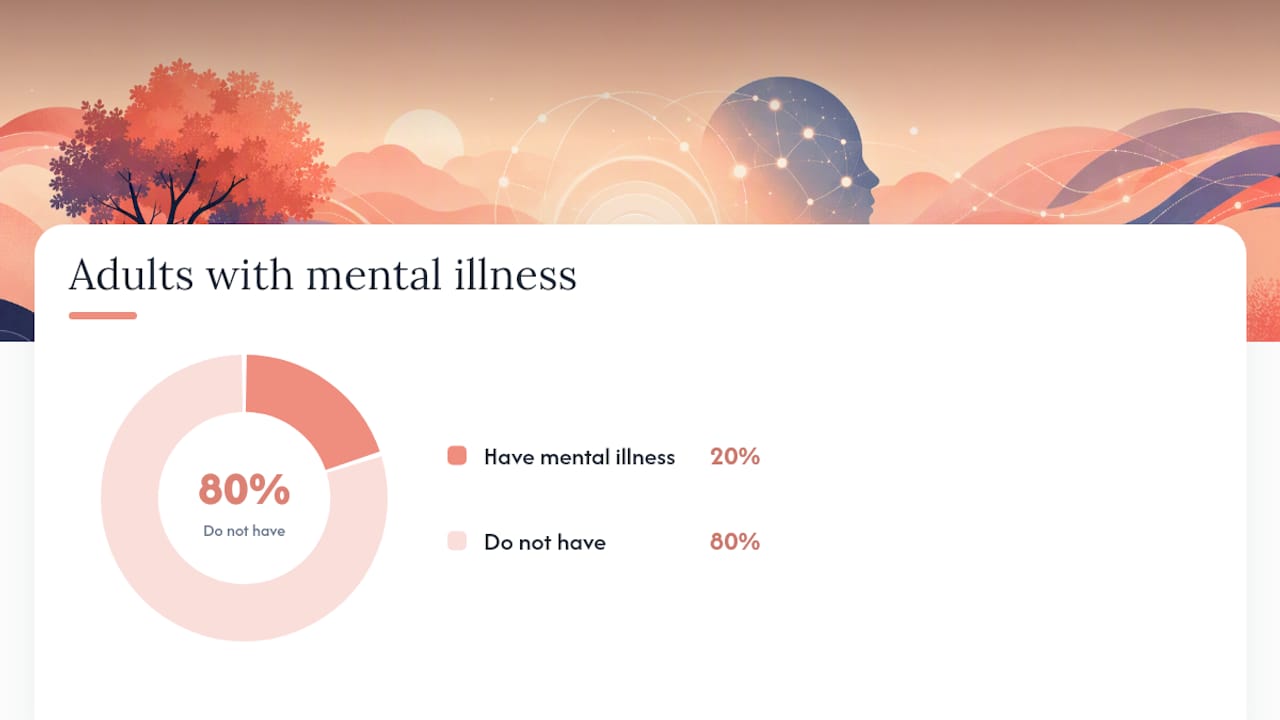
Roughly one in five U.S. adults experiences a mental illness in a given year, which is a large population relying on a licensing system most people never think to check before their first appointment. Two minutes on a state board site closes that gap.
Matching the Right Credential to Your Actual Need
Not every mental health concern calls for the same clinician type, and matching credential to need saves time and money. If you want weekly talk therapy for anxiety, depression, or life stress, a master's level clinician, LPC, LCSW, LMFT, or LMHC, is the standard and appropriate choice.
If you need a formal diagnosis, ADHD testing, or a neuropsych evaluation, look for a licensed psychologist (PhD or PsyD). If medication is likely part of the picture, you need a psychiatrist or PMHNP, since only prescribers hold that authority in nearly every state. For couples or family conflict specifically, an LMFT brings training built around relational dynamics rather than individual pathology alone.
Quick reference:
- Ongoing talk therapy → LPC, LCSW, LMFT, or LMHC
- Testing or formal diagnosis → licensed psychologist (PhD/PsyD)
- Medication management → psychiatrist or PMHNP
- Couples or family work → LMFT
Degree level matters less than most people assume. The strength of the working relationship between client and clinician, often called the therapeutic alliance, is one of the strongest predictors of good outcomes, frequently outweighing which degree hangs on the wall.
Pro Tip: When you're screening therapists, ask how many clients with your specific issue they've treated in the past year. That answer tells you more than the diploma does.
How Kin-Wellness Connects Credentials to the Care You Actually Get
Some virtual outpatient and intensive outpatient programs are staffed by licensed clinicians, so the credential distinctions above translate directly into what a session looks like. Medication management is handled by licensed prescribers, EMDR sessions typically follow structured, supervised training, and clients can ask about clinicians' license types before their first appointment.
A few ways this plays out in practice:
- Individual, group, and family therapy delivered by licensed master's and doctoral-level clinicians, detailed on our therapy services page.
- Medication management and virtual IOP for people who need therapy and prescribing coordinated, outlined on our services page.
- Background reading on choosing a therapist and verifying teletherapy licensure across state lines, both written to extend the verification steps above.
If you're a working professional or parent trying to figure out which credential fits your schedule and needs, our piece on therapy for professionals walks through that decision in more detail.
Where to Verify Credentials and Learn More
For license lookups, go straight to your state board rather than a general directory. For broader context, NIMH explains medication basics, NAMI breaks down provider types, and SAMHSA's national helpline connects you to immediate support if you need it now rather than after research.
The Credential Question Most People Ask Backwards
Most people research therapist credentials by ranking degrees, treating a PhD as automatically better than a master's level license. That instinct is understandable and mostly wrong. The Los Angeles Times' reporting on credential confusion backs up what the research on therapeutic alliance already suggests: fit and relevant experience predict outcomes better than degree prestige alone.
The bigger blind spot isn't which letters follow a name. It's that most people never check whether the license is active at all. A polished website and a warm introductory call tell you nothing about whether a license lapsed two years ago or carries a disciplinary flag. That two-minute state board search matters more than agonizing over LCSW versus LMFT.
If there's one thing to prioritize first, it's this: confirm the license is real and current, then evaluate fit. Everything else, including which specialty certificate someone lists, is secondary to those two checks.
— Dakota
This article is general information, not a substitute for advice from a qualified doctor. Consult a qualified healthcare professional about your own circumstances before acting on anything here.
Sources
- Mental health medications | NIMH
- Mental health providers: Who does what? - Mayo Clinic
- Types of Mental Health Professionals | NAMI
- Find Help | SAMHSA
FAQ
Is It Better to See an LPC or an LCSW?
Neither is inherently better. Both require a master's degree, supervised hours, and a licensing exam, and both provide psychotherapy for similar concerns. LCSWs sometimes have additional training in case management and systemic issues, while LPCs often focus more narrowly on clinical counseling, but the right choice depends more on the individual clinician's experience with your specific concern than on the letters themselves.
What Credentials Should a Therapist Have?
At minimum, a therapist should hold an active state license, LPC, LCSW, LMFT, or LMHC, which confirms a master's degree, thousands of supervised hours, and a passed licensing exam. Anyone using the title without a verifiable license should raise questions, since therapist itself isn't a protected title in most states.
Is a Therapist a PhD or an MD?
Neither, typically. Most therapists hold a master's degree (LPC, LCSW, LMFT, LMHC), not a doctorate. Psychologists hold a PhD or PsyD, and psychiatrists hold an MD or DO, but the term "therapist" usually refers to the master's level, talk-therapy focused clinician.
What Is the Lowest Degree for a Therapist?
A master's degree is the minimum for independent licensure as a therapist in nearly every state. Some pre-licensed roles, like registered associates or interns, practice under supervision while completing hours toward that license, but full, independent licensure requires the master's degree at minimum.