

Telepsychiatry for adults is live, clinician-led psychiatric care delivered through secure video or phone by licensed psychiatrists and prescribers, and for most common mood and anxiety disorders, research shows it produces outcomes comparable to in-person care. You can receive a full psychiatric evaluation, start medication, manage an existing prescription, or work through therapy without leaving your home or rearranging your workday.
Core services available through telepsychiatry include:
- Initial psychiatric evaluation (comprehensive diagnostic assessment)
- Psychotherapy (individual, couples, or family sessions depending on the provider)
- Medication management and prescription follow-ups
- Psychiatric consultation for second opinions or care coordination with your primary care physician
- Crisis-safety planning for patients managing ongoing risk
The evidence section below summarizes what the clinical trials and large real-world studies actually show. If you are ready to book, the preparation checklist and provider-selection guidance will get you there.
Key Takeaways
Telepsychiatry for adults delivers clinician-led psychiatric care that is statistically equivalent to in-person treatment for most common mood and anxiety disorders, provided the provider is licensed in your state and the platform is HIPAA-compliant.
| Point | Details |
|---|---|
| Evidence supports parity | A 17-RCT meta-analysis found a pooled efficacy SMD of −0.01 versus in-person care for PTSD, mood, and anxiety disorders. |
| Real-world outcomes are strong | A nationwide retrospective study (n=1,826) showed substantial average reductions in PHQ-8 and GAD-7 scores. |
| Licensure and prescribing rules apply | Clinicians must be licensed in your state; controlled-substance prescribing has stricter federal and state requirements. |
| Verify coverage before booking | Call your insurer with specific CPT codes and confirm in-network status, prior authorization, and cost estimate in writing. |
| Kin-wellness offers virtual outpatient care | Kin-wellness provides psychiatric evaluation, medication management, and therapy for adults in California, with insurance billing support. |
Table of Contents
- What services does telepsychiatry actually cover?
- How a U.S. telepsychiatry appointment works from intake to follow-up
- What the research says: is telepsychiatry as effective as in-person care?
- Who is a good candidate, and when is in-person care the better choice?
- Costs and insurance basics for telepsychiatry in the U.S.
- What privacy and security look like in telepsychiatry
- How to choose a telepsychiatry provider
- Why evidence-based virtual care matters more than convenience
- Selected sources and further reading
What services does telepsychiatry actually cover?
The scope is broader than most adults expect. A comprehensive psychiatric evaluation conducted via video runs roughly 60–90 minutes and covers diagnostic history, current symptoms, medications, substance use, and family psychiatric history, the same elements a clinician would gather in an office. That evaluation is the foundation for everything that follows.
Medication management is one of the most common reasons adults seek remote psychiatric care. Follow-up appointments are typically 15–30 minutes and focus on medication response, side effects, dosage adjustments, and lab monitoring when needed. For adults managing depression, anxiety, ADHD, or mood disorders, these check-ins translate directly into better adherence because the barrier to showing up is so much lower.
Psychotherapy delivered via telehealth covers most of the same modalities available in person: cognitive behavioral therapy (CBT), dialectical behavior therapy (DBT), EMDR (which some providers offer in-person or via video), and supportive therapy. Some platforms also offer group therapy, though availability varies by provider.
A few services remain harder to deliver remotely. Certain intensive outpatient programs (IOPs) require in-person components for group work or hands-on assessment. Eating disorder treatment often needs physical monitoring. And any presentation requiring a physical examination, such as ruling out a neurological cause for symptoms, will need an in-person referral. Knowing those limits upfront saves time.
How a U.S. telepsychiatry appointment works from intake to follow-up
The workflow is more structured than most people picture. Here is what a typical first appointment looks like, from the moment you book to the moment you leave the virtual waiting room.
Before the visit:
- Complete intake forms online (demographic info, insurance, symptom questionnaires)
- Submit insurance information for verification
- Sign telehealth-specific informed consent documents
- Receive a secure link to the video platform
During the initial evaluation:
- A board-certified psychiatrist or licensed prescriber conducts a 60–90 minute video session
- The clinician reviews your history, current symptoms, and treatment goals
- A preliminary diagnosis and treatment plan are discussed before the session ends
After the visit:
- A follow-up is scheduled (typically 2–4 weeks out for medication starts)
- Prescriptions are sent electronically to your pharmacy
- Session notes are stored in a HIPAA-compliant electronic health record
Technical requirements are minimal: a smartphone, tablet, or computer with a working camera and microphone, a stable internet connection, and a private space. Most platforms use a browser-based interface or a dedicated app with a virtual waiting room. Test your camera and microphone at least 15 minutes before the session, not 30 seconds before.
Licensure basics matter here. A clinician must be licensed in the state where you are physically located at the time of the appointment, not where the provider's office is based. Several states participate in interstate compacts that allow clinicians to practice across state lines more easily, but rules vary. If you travel frequently or split time between states, ask your provider directly how they handle that.
Prescribing basics: Clinicians can prescribe most non-controlled medications (antidepressants, mood stabilizers, non-stimulant ADHD medications) through telehealth when state rules and evaluation requirements are met. Controlled substances, including stimulants for ADHD and benzodiazepines, carry stricter federal and state requirements. The DEA's telehealth prescribing rules have shifted since the pandemic-era flexibilities; check your provider's current policy before assuming a stimulant prescription is straightforward. For a detailed look at what that conversation with a prescriber involves, the ADHD medication overview for adults covers the clinical protocols clearly.
Pro Tip: Before booking, ask the provider two questions: "Are you licensed in my state?" and "What is your policy on prescribing controlled substances via telehealth?" A provider who cannot answer both clearly is not the right fit.
What the research says: is telepsychiatry as effective as in-person care?
The short answer is yes, for most of the conditions adults most commonly seek psychiatric care for.
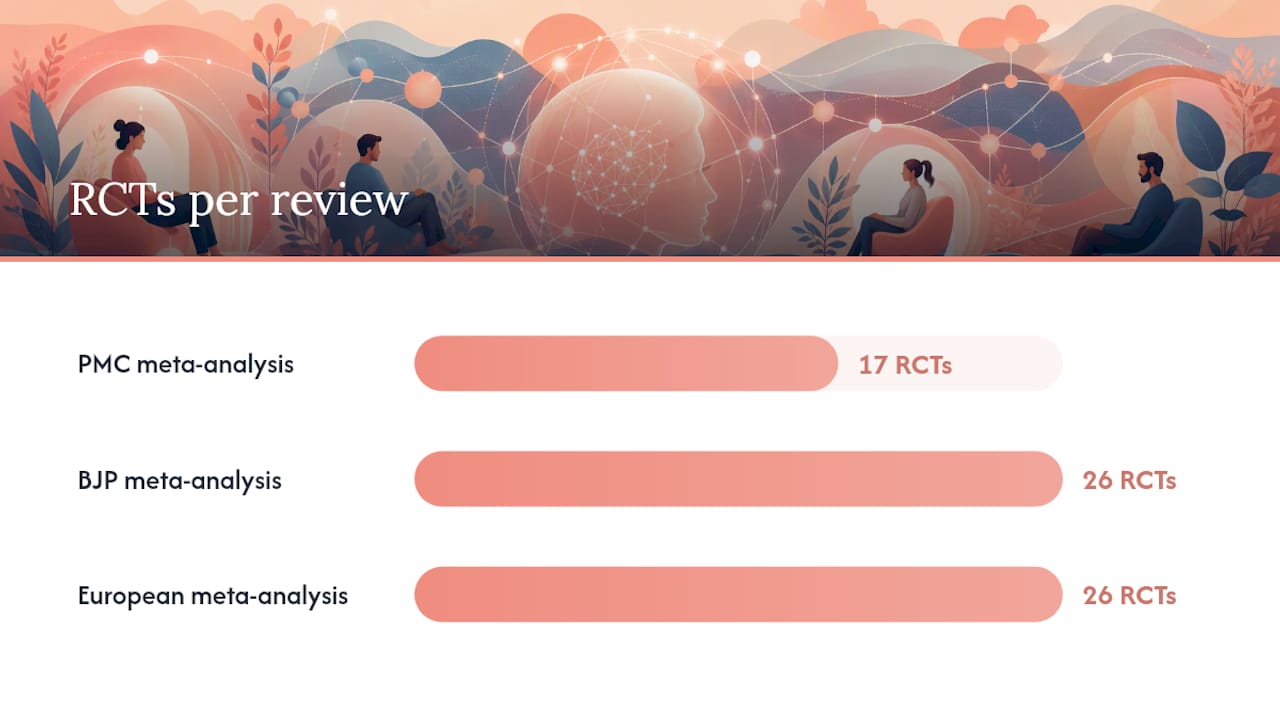
A 2023 systematic review and meta-analysis covering 17 randomized trials (n=1,814) found that telemedicine-based outpatient psychiatric treatment produced a pooled standardized mean difference of −0.01 (95% CI −0.12 to 0.09) compared to in-person care, meaning the two modalities were statistically equivalent for PTSD, mood disorders, and anxiety disorders. That is not a modest finding. A near-zero SMD across nearly 1,800 patients is strong evidence of parity.
Real-world data reinforces the picture. A large retrospective analysis of a nationwide telepsychiatry practice (n=1,826) found mean PHQ-8 scores dropped by 6.85 points and GAD-7 scores by 6.71 points, representing a substantial average symptom reduction for patients with moderate baseline symptoms. Those are clinically meaningful changes, not marginal improvements.
Evidence snapshot: Across 17 RCTs (n=1,814), telepsychiatry produced a pooled efficacy SMD of −0.01 versus in-person care, with equivalent patient satisfaction and attrition. In a separate real-world sample of 1,826 adults treated exclusively via telepsychiatry, average depression and anxiety symptoms fell by approximately 43–46%.
A broader meta-analysis of 26 RCTs published in the British Journal of Psychiatry confirmed non-inferiority overall, with condition-level differences worth noting: telepsychiatry showed particular strength for depressive disorders and PTSD, while evidence for eating disorders was thinner and less favorable. An earlier European meta-analysis of 26 RCTs reached the same non-inferiority conclusion across assessment and treatment outcomes. Research on therapeutic alliance and attrition shows comparable working-alliance scores across modalities, though variability exists by diagnosis and study design.
One distinction that matters clinically: synchronous, clinician-led video telepsychiatry is not the same thing as a mental health app. Text-based or asynchronous platforms differ substantially in clinical scope and do not typically provide full psychiatric evaluation or controlled-substance prescribing. The evidence above applies to live, licensed-clinician video care.
| Study / Review | Sample | Main Outcome | Clinical Takeaway |
|---|---|---|---|
| PMC meta-analysis (17 RCTs) | n=1,814 | SMD −0.01 (95% CI −0.12 to 0.09) | Equivalent efficacy to in-person for PTSD, mood, and anxiety disorders |
| British Journal of Psychiatry (26 RCTs) | Multiple RCTs | Non-inferiority overall; depression and PTSD strongest | Eating disorder evidence thinner; most adults are good candidates |
| European Psychiatry meta-analysis (26 RCTs) | Multiple RCTs | Non-inferiority for assessment and treatment | Consistent historical finding across diagnostic categories |
| Nationwide retrospective study | n=1,826 | PHQ-8 −6.85; GAD-7 −6.71 (~43–46% reduction) | Real-world outcomes match RCT findings for depression and anxiety |
Who is a good candidate, and when is in-person care the better choice?
Telepsychiatry works well for a wide range of adults, but it is not the right fit for every situation.
Adults who tend to benefit most:
- Those in rural or underserved areas where psychiatric specialists are scarce or have long wait times
- Working professionals, parents, and executives who cannot easily take a half-day for an in-office appointment (the therapy for professionals resource covers this dynamic in detail)
- Adults managing stable chronic conditions (depression, generalized anxiety, ADHD) who need consistent medication management
- Patients with mobility limitations or transportation barriers
- Anyone maintaining continuity of care during a move, job change, or extended travel
When in-person care is usually preferable:
- Active suicidal ideation with a concrete plan or means, or any acute safety crisis
- Severe alcohol or benzodiazepine withdrawal, which requires medical monitoring
- Complex medical comorbidities where a physical exam is needed to rule out organic causes
- Eating disorders requiring weight monitoring, medical stabilization, or structured meal support
- Presentations where hands-on observation or neuropsychological testing is clinically necessary
Some situations call for a hybrid approach: starting with in-person care to stabilize, then transitioning to telehealth for ongoing management. Intensive outpatient programs are one example; the IOP scheduling guide explains how that structure fits into a working adult's life. For presentations that may need residential or higher-intensity care, a mental health assessment guide can help you understand what the intake process looks like at different levels of care.
Crisis protocol: If you or someone else is in immediate danger during a telepsychiatry session, call 911 or go to the nearest emergency room. Reputable telepsychiatry providers build an emergency protocol into the informed-consent process, including confirming your address and a local emergency contact before the first session. Ask about this before you book, not during a crisis.
Costs and insurance basics for telepsychiatry in the U.S.
Coverage has expanded significantly since 2020, but the details still vary enough that you need to verify your own benefits before the first appointment.
Private insurance covers telepsychiatry similarly to in-person visits for many plans, particularly following state parity laws that require equivalent coverage for mental health services. That said, in-network availability, copay amounts, and prior authorization requirements differ by insurer and plan. California-specific coverage differences between major insurers, including how they handle virtual therapy, are covered in the Kaiser vs. Blue Shield comparison.
Medicare expanded telehealth coverage during the COVID-19 public health emergency, and several provisions have been extended through 2026. However, originating-site rules and coverage specifics continue to evolve. Do not assume your current Medicare plan covers telepsychiatry the same way it did last year; verify directly with Medicare or your Medicare Advantage plan.
Medicaid coverage varies by state. Many states now cover telehealth mental health services, but reimbursement rates, covered service types, and platform requirements differ.
Practical steps to confirm your coverage:
- Call the member services number on your insurance card and ask specifically about outpatient telepsychiatry (CPT codes 90792 for psychiatric evaluation, 90834/90837 for psychotherapy, 99213/99214 for medication management visits)
- Ask whether prior authorization is required for psychotherapy or psychiatric medication
- Confirm in-network vs. out-of-network rates and your deductible status
- Ask the provider's billing team to run a benefits verification before your first appointment
Pro Tip: Ask for a cost estimate in writing before the first visit. If cost is a barrier, ask directly about sliding-scale fees or self-pay rates. Many outpatient practices, including those that bill insurance, have options for patients who are uninsured or underinsured.
What privacy and security look like in telepsychiatry
HIPAA applies to covered healthcare providers regardless of whether care is delivered in person or via video. A HIPAA-compliant telepsychiatry platform uses end-to-end encryption, signs a Business Associate Agreement (BAA) with the provider, and stores session notes and records in a secured electronic health record system. During the early pandemic period, some providers used general-purpose video tools that were not fully HIPAA-compliant under temporary enforcement discretion. That flexibility has ended; any reputable provider today should be using a purpose-built or verified HIPAA-compliant platform.
Questions to ask your provider before the first session:
- "Is this platform HIPAA-compliant, and do you have a BAA with the vendor?"
- "How are session notes stored, and who has access to my records?"
- "What is your protocol if there is a data breach?"
- "Do you record sessions, and if so, who can access those recordings?"
- "What are the limits of confidentiality, and under what circumstances would you share my information?"
Informed consent for telehealth typically covers the emergency plan (your address, local contact, what happens if you are in crisis), the limits of confidentiality (mandatory reporting obligations do not change in telehealth), recording policies, and what happens to your records if the provider closes or changes platforms. Read it carefully. The consent form is also where you will find the provider's policy on between-session contact and how urgent concerns are handled.
How to choose a telepsychiatry provider
The credential check takes about ten minutes and is worth every second.
What to look for:
- Board certification: A psychiatrist should be board-certified by the American Board of Psychiatry and Neurology (ABPN). Licensed clinical social workers, psychologists, and nurse practitioners have their own licensing boards.
- State licensure in your state: Verify through your state's licensing board website. Most states have a public lookup tool.
- Insurance participation: Confirm the provider bills your specific plan, not just "most major insurers."
- Specialty match: A provider with experience in your specific condition (PTSD, bipolar disorder, adult ADHD) will be more effective than a generalist when your presentation is complex.
- Follow-up availability: Ask how quickly you can be seen for an urgent concern between scheduled appointments.
- Emergency protocol: A clear, documented plan for what happens if you are in crisis during or between sessions.
Red flags to watch for:
- Refuses to share licensure details or state of licensure
- No documented emergency or local backup plan
- Pressure to purchase supplements, programs, or products alongside psychiatric care
- Vague or missing privacy policy and record-keeping documentation
- No informed-consent process before the first session
To verify credentials quickly, search your state's medical or professional licensing board by the clinician's name. The APA's telepsychiatry patient resources include guidance on what questions to ask and what to expect from a qualified provider. For clinicians and patients wanting deeper practice-level standards, PsychiatryOnline hosts clinical guidelines and professional resources that reflect current standards of care.
Why evidence-based virtual care matters more than convenience
The conversation around telepsychiatry tends to get framed as a convenience story. Flexible scheduling, no commute, care from your couch. That framing undersells what the evidence actually shows and, more importantly, it sets the wrong expectation for what good virtual psychiatric care looks like.
The research does not say telepsychiatry is "almost as good" as in-person care. For depression, anxiety, and PTSD, the data shows equivalence, not approximation. A pooled SMD of −0.01 across nearly 1,800 patients is not a consolation prize. It is a finding that should change how adults think about access to psychiatric care.
What the convenience framing also misses: the adults who benefit most from telepsychiatry are often not choosing it because it is easier. They are choosing it because in-person psychiatric care was not accessible to them at all. Long wait times, geographic distance, the impossibility of taking three hours out of a workday with two kids at home. For those adults, telepsychiatry is not a downgrade. It is the difference between getting care and not getting care.
The caveat worth holding onto is this: not every platform that calls itself telepsychiatry is delivering the same thing. A licensed psychiatrist conducting a 90-minute video evaluation and managing your medication is categorically different from a chatbot or an asynchronous app. The evidence of parity applies to the former. Patients deserve to know that distinction before they book.
At Kin-wellness, the approach is built around that standard: board-certified clinicians, structured intake, coordinated medication management, and informed-consent processes that include a real emergency plan. That is what evidence-based virtual care actually looks like in practice.
Selected sources and further reading
These are the primary sources behind the claims in this article. Each one is worth bookmarking if you want to go deeper on the evidence or verify provider standards.
- Psychiatric Treatment Conducted via Telemedicine Versus In-Person Modality in Posttraumatic Stress Disorder, Mood Disorders, and Anxiety Disorders: Systematic Review and Meta-Analysis — PMC
- Evaluating Clinical Outcomes in Patients Being Treated Exclusively via Telepsychiatry: Retrospective Data Analysis — PMC
- Videoconferencing in psychiatry, a meta-analysis of assessment and treatment | European Psychiatry | Cambridge Core
- What is Telepsychiatry? — APA patient resources
- Checking your browser — reCAPTCHA
- psychiatryonline.org