

If you’re a physician, attorney, executive, or therapist who’s been running on empty, the short answer is this: therapy for professionals works, and the first step is booking a 15–20 minute consult with a clinician who specifically lists burnout, compassion fatigue, or high-pressure careers in their specialty areas. Don’t wait until you’re in crisis.
When you call or message to book, say two things upfront:
-
“I need evening or telehealth availability.”
-
“Confidentiality in a small professional community is a priority for me.”
Those two sentences filter out the wrong fit immediately and signal to a good clinician that you know what you need.
Pro Tip: Ask whether the clinician has worked with other professionals in your field. A therapist who has treated physicians, attorneys, or social workers understands the specific pressures — dual relationships, licensing concerns, performance identity — that a generalist may not.
Table of Contents
-
How do you choose the right therapist for a demanding career?
-
Confidentiality, scheduling, insurance, and privacy strategies
-
Why I recommend therapy for professionals without hesitation
What signs tell you it’s time to seek therapy?
Burnout doesn’t announce itself cleanly. For most professionals, it builds quietly: shorter fuse with colleagues, difficulty concentrating on tasks that used to feel automatic, a creeping cynicism about work that once felt meaningful. Compassion fatigue, common among nurses, social workers, therapists, and first responders, shows up differently — as emotional numbness, reduced empathy, or a sense of going through the motions with clients or patients.
Common presentations that bring professionals to therapy include:
-
Persistent anxiety or dread before work, even on days off
-
Insomnia or non-restorative sleep despite exhaustion
-
Irritability, emotional detachment, or cynicism toward colleagues or clients
-
Decreased performance, missed deadlines, or difficulty making decisions
-
Physical symptoms with no clear medical cause (headaches, GI issues, fatigue)
-
Vicarious trauma from repeated exposure to others’ suffering
-
Imposter syndrome that has intensified rather than faded with experience
Seek care urgently if you notice rapid functional decline, increasing use of alcohol or substances to cope, or any thoughts of self-harm. These are not signs of weakness — they are clinical signals that warrant immediate attention.
This applies across roles: executives, healthcare staff, attorneys, entrepreneurs, managers, first responders, and mental health clinicians themselves. According to burnout research from the Mayo Clinic, burnout is a state of physical and emotional exhaustion that can impair judgment and erode professional identity over time. Recognizing it early changes the trajectory.
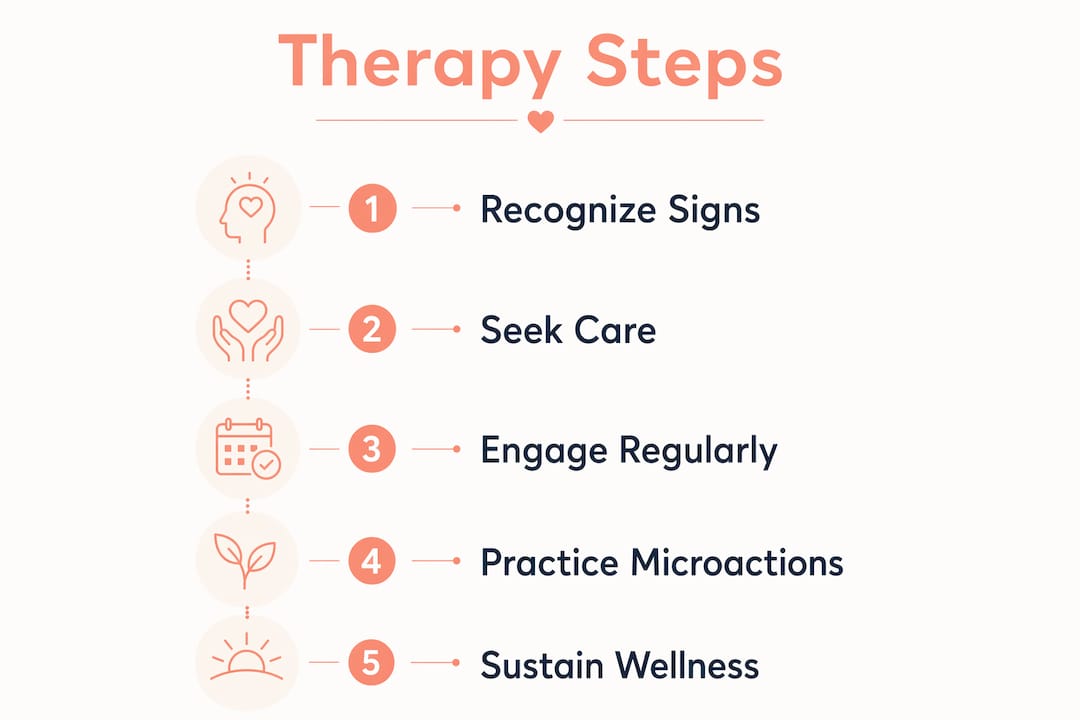
How therapy helps high-performing professionals
The clinical benefits are well-documented. Therapy reduces depression and anxiety scores, improves sleep quality, and lowers physiological stress markers. For professionals specifically, those gains translate into concrete work outcomes.
Better nervous-system regulation means shorter recovery time after high-stakes decisions. Improved boundary-setting reduces the work-to-home spillover that quietly destroys relationships and sleep. Restored professional satisfaction — the sense that your work matters again — is one of the most consistent outcomes reported by professionals who complete a full course of treatment.
Therapy gives professionals a structured space to examine the beliefs and patterns driving their behavior — not just to feel better, but to perform better, lead more clearly, and sustain a career they actually want to keep.
Specific outcomes professionals commonly report after a course of therapy:
-
Clearer, faster decision-making under pressure
-
Reduced emotional reactivity in high-stakes conversations
-
Improved communication with teams and direct reports
-
Restored capacity for empathy with clients or patients
-
Ability to set limits on workload without guilt or fear
Micro-practices — brief breathwork, grounding exercises, and end-of-day rituals — are often introduced in therapy as between-session tools that reduce work-home spillover and reinforce nervous-system regulation. They work best when embedded in a clinician-guided plan rather than used as standalone fixes.

Which therapy approaches work best for professionals?
The right modality depends on the presenting concern, not just the job title. Here’s how common approaches map to professional presentations:
| Modality | Best fit | Format |
|---|---|---|
| CBT (Cognitive Behavioral Therapy) | Performance anxiety, perfectionism, imposter syndrome | Individual, weekly |
| ACT (Acceptance and Commitment Therapy) | Burnout, values clarification, work-identity conflict | Individual or group |
| EMDR | Unprocessed trauma, vicarious trauma, stuck stress responses | Individual, can be intensive |
| Psychodynamic therapy | Career identity, relational patterns, countertransference | Individual, longer-term |
| Somatic/neuroexperiential | Acute dysregulation, chronic stress, physical symptoms | Individual |
| Medication management | Moderate-to-severe depression, anxiety, sleep disorders | Prescriber, adjunct to therapy |
| Group therapy | Peer support, isolation, shared professional experience | Small group, facilitated |
EMDR is particularly useful when a professional feels “stuck” despite insight — when they understand the problem intellectually but can’t shift the emotional response. CBT and micro-practices, including breathwork and sensory-based tools, suit professionals who need quick, deployable regulation strategies between meetings or during high-demand periods.
For helping professionals — therapists, nurses, social workers — therapy that addresses countertransference and personal biases is especially valuable. Clinician self-awareness directly improves client care and reduces the risk of vicarious harm.
How do you choose the right therapist for a demanding career?
Start with licensure and specialty. A licensed clinical social worker (LCSW), licensed professional counselor (LPC), licensed marriage and family therapist (LMFT), or licensed psychologist (PhD/PsyD) are all qualified to provide outpatient therapy. What matters beyond credentials is whether they have direct experience with your professional context.
Checklist for evaluating a therapist:
-
Do they list burnout, compassion fatigue, executive stress, or helping-professional concerns as specialty areas?
-
Do they offer telehealth and evening or early-morning slots?
-
Can they bill your insurance, or do they offer out-of-network superbills?
-
Do they use a HIPAA-compliant platform for sessions and messaging?
-
Are they familiar with the dual-relationship and confidentiality concerns specific to small professional communities?
At the consult, ask directly: “Have you worked with other professionals in my field?” and “How do you handle session notes and billing descriptors if I have privacy concerns?” A good clinician won’t be rattled by those questions. They’ll have clear answers.
Pro Tip: If you work in a small city or a tightly networked field, ask whether the therapist has any existing relationships with colleagues or employers in your organization. Dual relationships are an ethical concern in therapy, and a competent clinician will disclose any potential conflicts before you begin.

What happens in the first sessions?
The intake session covers more ground than most people expect. A clinician will gather history, assess current stressors and their functional impact, screen for safety, review any medications, and collaboratively set short-term goals. It’s less like a job interview and more like a thorough first conversation with someone who is genuinely trying to understand your situation.
Typical early-session focus areas:
-
Current symptoms and how long they’ve been present
-
Work environment and specific stressors (caseload, leadership demands, organizational culture)
-
Sleep, appetite, physical health, and substance use
-
Relationships and support systems outside work
-
Previous therapy experience and what helped or didn’t
A rough timeline for professionals:
-
Sessions 1–4: Stabilization. Reduce acute distress, establish safety, introduce regulation tools.
-
Sessions 5–16: Skill-building. Address core patterns — perfectionism, boundary deficits, avoidance, rumination.
-
Sessions 16 and beyond: Identity and meaning work. Examine career values, professional identity, long-term sustainability.
Individual variability is real. Some professionals feel meaningfully better after 6–8 sessions. Others, particularly those with longer-standing burnout or trauma histories, benefit from a longer course. Session cadence is typically weekly at 45–60 minutes, though some clinicians offer 90-minute strategic sessions for leaders with limited availability.
Confidentiality, scheduling, insurance, and privacy strategies
This is where most professionals get stuck — not because therapy isn’t available, but because the logistics feel complicated or the privacy risks feel real.
Confidentiality basics:
-
HIPAA protects your mental health records. Therapists cannot share information with your employer without your written consent.
-
Private-pay (out-of-pocket) avoids insurance billing entirely, which means no diagnostic code on your insurance record. This matters for some professionals in licensed or security-cleared roles.
-
If you use insurance, you can ask your therapist to use a general billing descriptor and to limit what appears in session notes.
| Option | Privacy level | Cost |
|---|---|---|
| Private pay | Highest | Full session fee; FSA/HSA eligible |
| Out-of-network (OON) with superbill | High | Pay upfront, partial reimbursement from insurer |
| In-network insurance | Standard | Copay or deductible; diagnosis on record |
Scheduling solutions for busy professionals:
-
Telehealth eliminates commute time and allows sessions from a private office or car
-
Evening and early-morning slots are available at many outpatient practices
-
Intensive formats (multiple sessions per week or half-day blocks) suit professionals with unpredictable schedules
Kin-wellness maintains a published HIPAA privacy policy that outlines exactly how client information is handled, which is worth reviewing before your first session if confidentiality is a concern.
Pro Tip: FSA and HSA funds can be used for therapy sessions, including telehealth. If your employer offers these accounts, using them for mental health care is both tax-advantaged and private — the transaction appears as a healthcare expense, not a therapy charge.
Why therapy is a strategic advantage, not just a support
The American Psychiatric Association has noted that burnout is a significant occupational phenomenon affecting professionals across industries, with consequences that extend well beyond individual wellbeing into patient safety, organizational performance, and workforce retention.
Clinicians who work with executives and high performers increasingly frame therapy not as remedial care but as a strategic investment. The work targets nervous-system regulation, decision-making under uncertainty, and the boundary formation that sustains long-term performance. That’s a different frame than “something is wrong with me.”
Therapy for leaders and high performers is less about fixing what’s broken and more about building the internal infrastructure that high-demand careers require — and that most professional training programs never address.
The evidence supports this framing. Burnout left untreated tends to worsen, not stabilize. Clinician-guided interventions outperform unstructured wellness trends precisely because they are targeted, measurable, and adapted to the individual’s clinical picture rather than a generic self-care checklist.
For helping professionals specifically, therapy that addresses personal biases and countertransference doesn’t just protect the clinician. It directly improves the quality of care their clients receive.
Key Takeaways
Therapy for professionals is most effective when it’s clinician-led, career-informed, and started before burnout becomes a crisis.
| Point | Details |
|---|---|
| Start with a consult | Book a 15–20 minute intake call and ask directly about burnout and confidentiality experience. |
| Match modality to need | EMDR for stuck trauma, CBT for performance anxiety, psychodynamic work for career identity. |
| Protect your privacy | Private pay or OON billing keeps your diagnosis off your insurance record; FSA/HSA funds apply. |
| Expect a realistic timeline | Early stabilization takes several sessions; meaningful skill-building typically extends over multiple sessions. |
| Kin-wellness for professionals | Kin-wellness offers virtual outpatient therapy, EMDR, medication management, and insurance billing support for working professionals in California. |
Why I recommend therapy for professionals without hesitation
The professionals I see most reluctant to seek care are often the ones who need it most urgently. There’s a particular pattern: high competence, high self-sufficiency, and a deep discomfort with being on the receiving end of support. Attorneys who advise clients through crises. Nurses who hold space for dying patients. Executives who project calm while their own nervous systems are running on fumes.
The stigma is real, but it’s also changing. Asking for help is increasingly understood as a sign of self-awareness, not weakness. What I’d push back on is the idea that therapy is something you do when things fall apart. The professionals who get the most from it are the ones who come in early, when they still have the bandwidth to do the actual work.
If privacy is your concern, telehealth and private-pay options exist precisely for this reason. If time is the barrier, evening sessions and intensive formats are available. If you’re worried about being judged — a good therapist who works with professionals has heard it all, and their job is to help you, not evaluate you.
Start small. Book one consult. Give it four to six sessions before you decide whether it’s working. That’s a low-stakes experiment with a potentially significant return.
Kin-wellness supports working professionals in California
Working professionals in California who are ready to stop managing symptoms on their own have a direct path forward with Kin-wellness. The practice offers virtual outpatient therapy, EMDR (available in-person or via telehealth), medication management, group therapy, and insurance billing support — all designed for adults navigating high-demand careers.

Evening telehealth slots mean you don’t have to rearrange your schedule or explain an absence. Insurance billing support handles the paperwork, and private-pay options are available for professionals who want to keep their mental health care off their insurance record. The team includes licensed therapists and prescribers with experience working with executives, healthcare workers, parents, and helping professionals.
To get started, visit the Kin-wellness services page and book a free consultation. Come prepared to ask about clinician experience with burnout and your specific professional context. That one conversation is the lowest-friction first step available to you right now.
Useful sources and further reading
Micro-practices and stress regulation:
-
How Routine Reduces Stress: a Practical Daily Guide — Evergreen Bliss: evidence-informed daily routines for reducing work-home spillover; useful for professionals building between-session habits.
-
Tips for Preventing Caregiver Burnout — Horizons Support Network: practical prevention strategies including boundary-setting and peer support for helping professionals and caregivers.
Kin-wellness resources:
-
Kin-wellness Services: full list of therapy formats, specialties, telehealth availability, and insurance support for California adults.
-
Kin-wellness Privacy Policy: HIPAA and confidentiality practices, including how client data is stored and protected.