

ADHD medication for adults refers to pharmaceutical treatments designed to reduce inattention, impulsivity, and hyperactivity in people with attention-deficit/hyperactivity disorder. These medications work primarily by increasing dopamine and norepinephrine activity in the brain, which improves focus, working memory, and impulse control. The FDA has approved several medications specifically for adult use, and ADHD diagnosis and treatment among adults has grown substantially as recognition of the condition in this age group has improved.
A few things worth knowing upfront:
-
Medication is not a cure. It manages symptoms, often dramatically, but works best alongside behavioral strategies.
-
Two main categories exist: stimulants (first-line) and non-stimulants (used when stimulants are not tolerated or preferred).
-
Response is highly individual. What works well for one person may not work for another, even at the same dose.
-
Adult ADHD symptoms often look different from childhood presentations, which is why diagnosis and treatment planning require tailored clinical assessment.
-
Treatment is a process, not a single prescription. Expect titration, follow-ups, and adjustments.
Table of Contents
-
What are the real risks and benefits of ADHD medication for adults?
-
Kin-wellness offers medication management built for your life
What types of ADHD medications are available for adults?
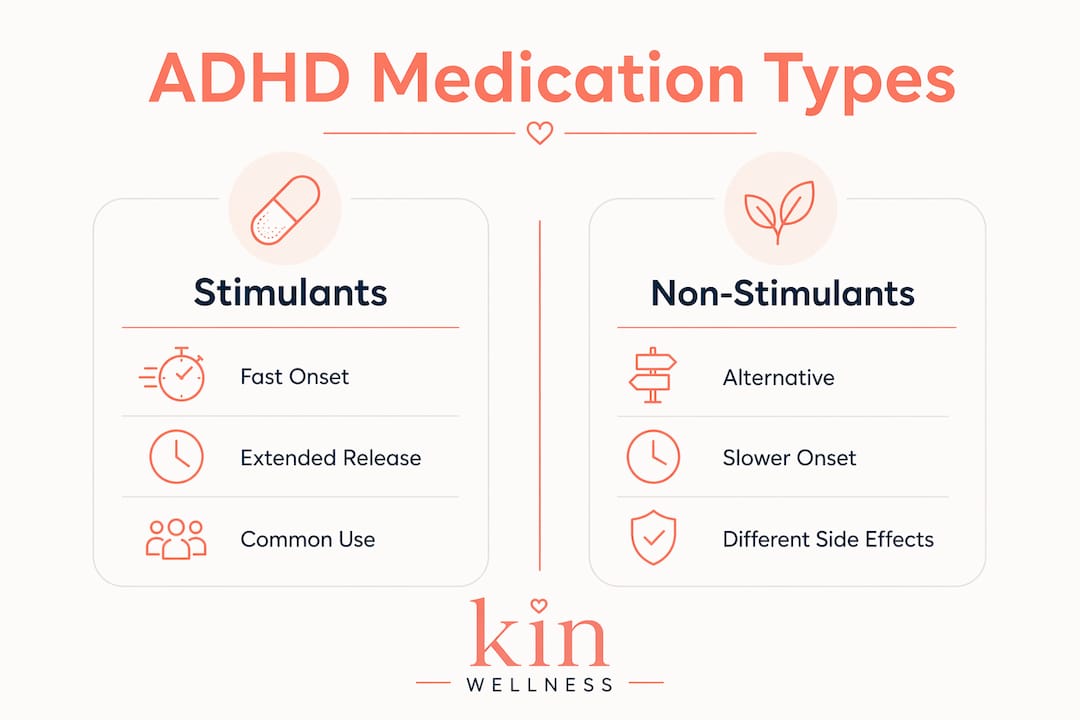
Adult ADHD treatment draws from three broad medication categories: stimulants, non-stimulants, and off-label options.
Understanding the differences helps you have a more informed conversation with your prescriber.
Stimulant medications are the first-line choice. They fall into two chemical families:
-
Amphetamine compounds (e.g., mixed amphetamine salts, lisdexamfetamine): Generally show the largest effect on core ADHD symptoms in adults at 12 weeks, based on comprehensive ADHD drug reviews.
-
Methylphenidate compounds (e.g., Ritalin, Concerta): Show a small to moderate effect compared to placebo and are widely prescribed. Both immediate-release and extended-release formulations exist.
Stimulants typically begin working within about an hour. Extended-release versions last 8–12 hours, which suits most working adults better than taking multiple doses throughout the day.
Non-stimulant medications are the alternative when stimulants are contraindicated, not tolerated, or simply not preferred. Atomoxetine (Strattera) has the most clinical evidence among non-stimulants for adults. Viloxazine (Qelbree) is a newer FDA-approved option. Both take roughly four weeks to reach full effect, though some benefit may appear earlier. Non-stimulants carry lower abuse potential and can be a better fit for adults with co-occurring anxiety.

Off-label options include certain antidepressants like bupropion (Wellbutrin) and tricyclics, as well as alpha agonists like guanfacine and clonidine. These are not FDA-approved specifically for adult ADHD but are used clinically when other options have failed or when comorbid conditions make them a practical choice.
Medication choice depends heavily on your medical history, any co-occurring conditions, and your specific symptom profile. No single medication suits every adult with ADHD.
Common ADHD medication names you’ll encounter in the US
Knowing the names helps you understand what your prescriber is discussing and what your pharmacy is dispensing. Here is a breakdown by category.
Stimulants: Amphetamine-based
-
Adderall (mixed amphetamine salts, immediate-release)
-
Adderall XR (extended-release)
-
Vyvanse (lisdexamfetamine, once-daily extended-release)
-
Dexedrine (dextroamphetamine, immediate-release)
Stimulants: Methylphenidate-based
-
Ritalin (immediate-release, typically dosed 2–3 times daily)
-
Concerta (extended-release, once daily)
-
Ritalin LA (extended-release, once daily)
-
Focalin / Focalin XR (methylphenidate, immediate and extended-release)
-
Daytrana (methylphenidate patch)
Non-stimulants (FDA-approved for adults)
-
Strattera (atomoxetine)
-
Qelbree (viloxazine)
Off-label options used clinically
-
Wellbutrin (bupropion)
-
Intuniv / Tenex (guanfacine)
-
Kapvay / Catapres (clonidine)
The table below summarizes key distinctions between delivery types and onset.
| Medication | Type | Release | Onset of Effect |
|---|---|---|---|
| Adderall XR | Amphetamine stimulant | Extended | about an hour |
| Vyvanse | Amphetamine stimulant | Extended (once daily) | about an hour |
| Ritalin | Methylphenidate stimulant | Immediate | about an hour |
| Concerta | Methylphenidate stimulant | Extended | about an hour |
| Strattera | Non-stimulant (atomoxetine) | N/A | roughly four weeks |
| Qelbree | Non-stimulant (viloxazine) | Extended | roughly four weeks |
| Wellbutrin | Off-label antidepressant | Varies | Several weeks |
Brand names like Ritalin, Concerta, Adderall XR, Strattera, and Qelbree represent the most commonly prescribed options in the US market, though generics are widely available and therapeutically equivalent.
What are the real risks and benefits of ADHD medication for adults?
The benefits are real and, for many adults, significant. Approximately 70% of adults respond favorably to stimulants, with measurable improvements in attention, task completion, and reduced impulsivity. For someone who has spent years struggling with missed deadlines, forgotten appointments, or chronic disorganization, that kind of response can change daily functioning in concrete ways.
Common benefits adults report:
-
Sustained focus during complex tasks
-
Reduced impulsive decision-making
-
Better working memory and follow-through
-
Improved emotional regulation
-
More consistent work and relationship performance
The side effect picture is worth understanding clearly, not to alarm you, but to set realistic expectations.
Stimulant-related side effects include insomnia, appetite suppression, headache, stomach discomfort, and modest increases in heart rate and blood pressure. Major cardiovascular events are rare, but your prescriber will monitor blood pressure and pulse regularly. Psychosis is very rare (occurring in 0.01–0.1% of cases), though amphetamines may carry a slightly higher risk than methylphenidate. If significant psychiatric symptoms develop, the medication should be stopped and a psychiatrist consulted promptly.

Non-stimulant side effects tend to differ. Atomoxetine commonly causes nausea, fatigue, and decreased appetite, particularly early in treatment. It was also less well tolerated than placebo in some trials, with more discontinuations due to adverse effects. That said, non-stimulants carry lower abuse potential and are often better suited for adults with anxiety disorders.
Drug interactions are a real consideration. Stimulants can interact with MAOIs, certain blood pressure medications, and other psychiatric drugs. Always give your prescriber a complete list of everything you take, including supplements.
Stimulants are DEA Schedule II controlled substances. That classification exists because misuse and diversion are documented risks, particularly in college-age and young adult populations. For most adults using medication as prescribed under medical supervision, the risk profile is manageable.
How ADHD is diagnosed and managed in adults
Diagnosis is the starting point, and it is more involved than a quick questionnaire. There is no single lab test or brain scan that confirms ADHD. Instead, diagnosis requires a comprehensive clinical evaluation that includes structured symptom rating scales, a detailed personal and family history, and ruling out other conditions that can mimic ADHD, such as anxiety, depression, thyroid disorders, and sleep apnea.
Adult ADHD symptoms often look different from the hyperactive child most people picture. Adults are more likely to present with chronic disorganization, difficulty sustaining attention on low-stimulation tasks, emotional dysregulation, and a persistent sense of underachievement. That subtlety is part of why adult ADHD went unrecognized for so long.
The medication management process typically unfolds like this:
-
Initial evaluation: Full history, symptom scales, ruling out mimicking conditions and comorbidities.
-
Starting medication: Usually at a low dose, with a specific stimulant chosen based on your history, comorbidities, and preferences.
-
Titration: Dose is adjusted gradually until symptoms are well-controlled with minimal side effects.
-
Early follow-ups: Monthly visits initially to monitor effectiveness, blood pressure, sleep, appetite, and mood.
-
Long-term monitoring: Once stable, visits typically shift to every 3–6 months.
Many adults with ADHD have co-occurring conditions like anxiety, depression, or substance use disorders. These comorbidities directly influence which medication is chosen first and in what sequence. An adult with significant anxiety, for example, may start with a non-stimulant rather than a stimulant, even though stimulants are the general first-line choice.
Practical realities of managing stimulant prescriptions:
-
Stimulants require regular in-person or telehealth provider visits for prescription renewals.
-
Insurance coverage varies widely; prior authorization is common for brand-name medications.
-
Controlled substance regulations mean prescriptions cannot be called in or refilled early in most states.
Pro Tip: Track your symptoms and side effects in a simple daily log, even just a few notes on your phone. Bringing that data to follow-up appointments gives your prescriber something concrete to work with, rather than relying on memory of how you felt three weeks ago.
Medication alone rarely produces the best outcomes. Combining medication with behavioral strategies like cognitive behavioral therapy (CBT) and ADHD coaching consistently improves long-term functioning beyond what medication achieves on its own. CBT helps adults build the organizational systems and self-monitoring habits that medication cannot install by itself.
Kin-wellness offers medication management built for your life
Managing ADHD as a working adult, a parent, or a healthcare professional is not the same as managing it as a college student with a flexible schedule. The logistics matter: finding a prescriber who takes your insurance, getting consistent follow-up appointments, and having someone who understands how ADHD intersects with professional stress, parenting demands, and co-occurring anxiety or depression.

Kin-wellness provides virtual outpatient mental health services for adults in California, including medication management handled by licensed prescribers. That means you can get a thorough ADHD evaluation, start a medication regimen, and maintain regular follow-up appointments without taking half a day off work to sit in a waiting room. Kin-wellness also offers individual therapy, group therapy, and EMDR, so if your ADHD comes with anxiety or depression (which it often does), you can address both in one place. Insurance billing support is included, which removes one of the most common friction points adults face when trying to access consistent psychiatric care.
If you are ready to move from information to actual treatment, book a consultation with Kin-wellness and get a clear picture of your options.
Key Takeaways
Stimulant medications remain the most effective first-line treatment for adult ADHD, with approximately 70% of adults responding favorably, but the right medication, dose, and combination with behavioral therapy requires ongoing clinical partnership.
| Point | Details |
|---|---|
| Stimulants are first-line | Amphetamines and methylphenidate work within about an hour and show the strongest evidence for adults. |
| Non-stimulants take longer | Atomoxetine and viloxazine take roughly four weeks to reach full effect but carry lower abuse potential. |
| Diagnosis requires full evaluation | No single test confirms adult ADHD; clinical history, rating scales, and ruling out other conditions are all required. |
| Monthly follow-ups matter early | Regular check-ins allow dose titration and side effect monitoring before shifting to every 3–6 months. |
| Kin-wellness supports adult care | Virtual medication management and therapy for adults in California, with insurance billing support included. |