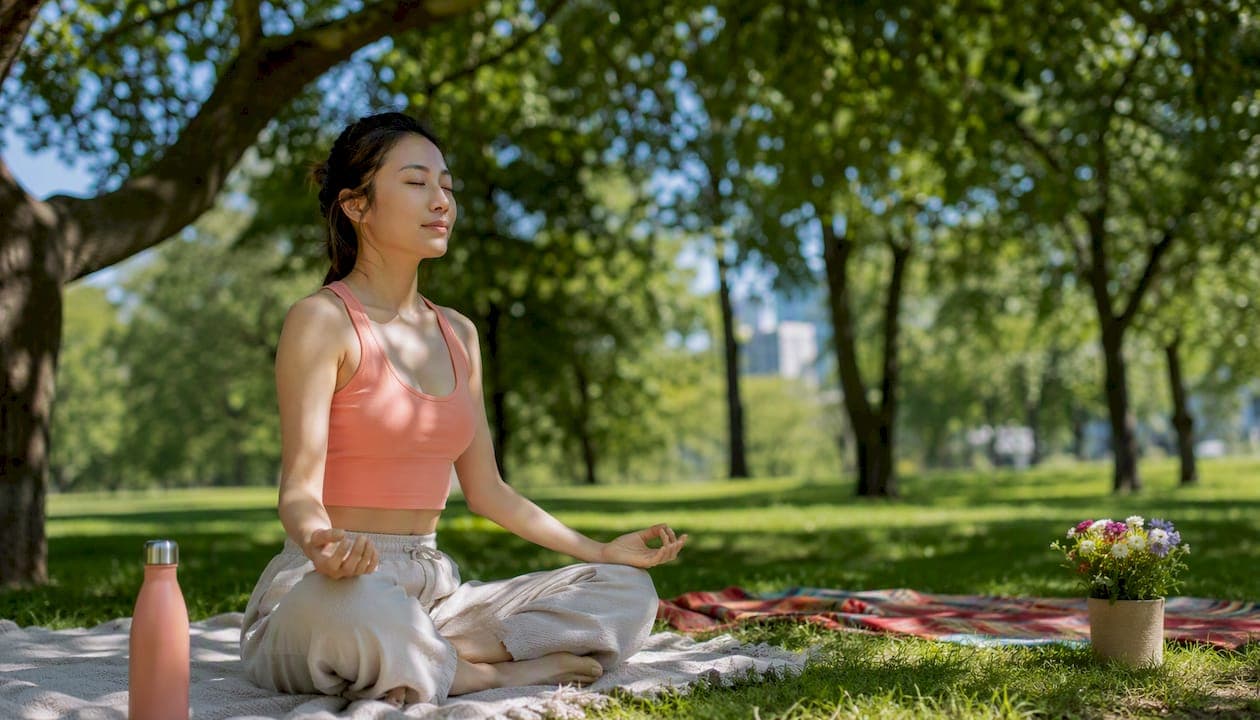
Yes, mindfulness reduces anxiety for many people, and you can start in the next 60 seconds. Try one of these right now:
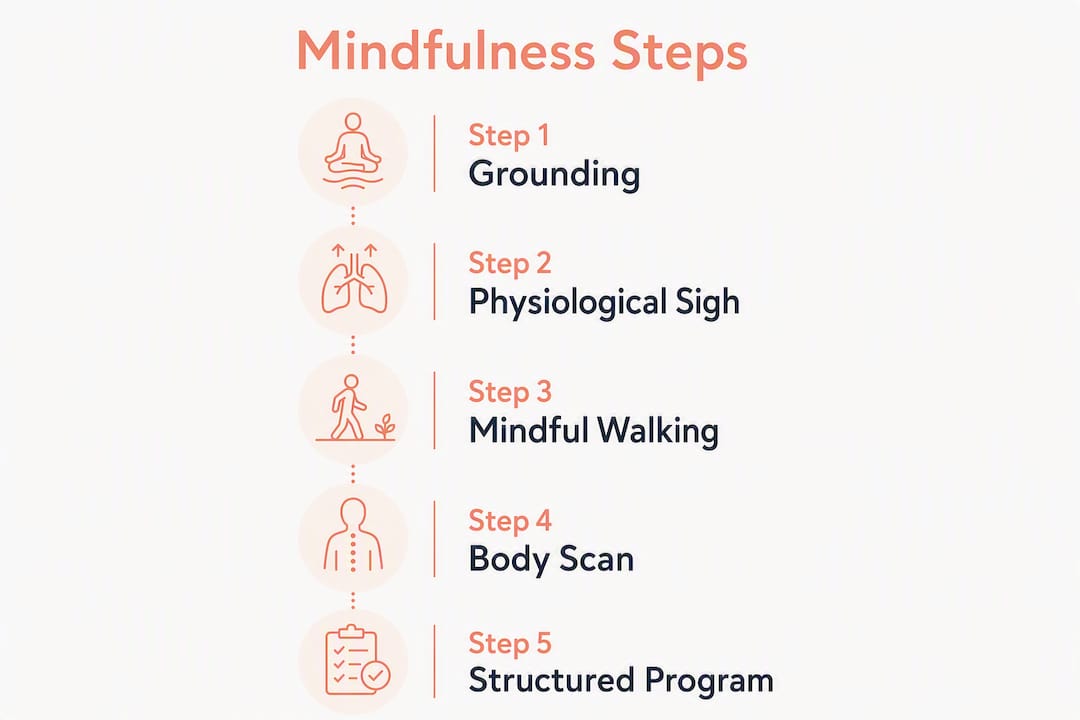
- Breathe out slowly. Inhale through your nose for 4 counts, then exhale through your mouth for 6. Repeat three times. The longer exhale activates your parasympathetic nervous system and signals safety to your brain.
- Name five things you can see. Look around and label them silently: lamp, window, coffee cup, plant, door. This 5-4-3-2-1 grounding technique interrupts the mental loop that feeds anxious thinking.
- Notice the thought, don't fight it. When a worry surfaces, mentally label it: "There's a worry about work." That single act of labeling creates distance between you and the thought.
Immediate relief is real, but lasting change takes consistent practice over weeks. Most people notice meaningful shifts after several weeks of daily practice. One important note: if anxiety is severe, involves panic attacks, or is interfering with your ability to work or care for yourself, mindfulness works best as part of a broader clinical plan, not as a standalone fix.
Table of Contents
- How mindfulness for anxiety actually works: the evidence
- Mindfulness exercises you can use right now for anxiety
- What structured 8-week programs (MBSR and MBCT) look like
- How to build a sustainable mindfulness practice for anxiety
- When mindfulness alone isn't enough: signs you need clinical support
- Key Takeaways
- Why Kin-wellness recommends this approach
- Kin-wellness can support your next step
- Useful sources and further reading
How mindfulness for anxiety actually works: the evidence
Mindfulness is not about clearing your mind. Its therapeutic power lies in noticing thoughts and returning attention to an anchor, over and over, until you build what researchers call metacognitive awareness: the ability to observe a thought as a mental event rather than a fact.
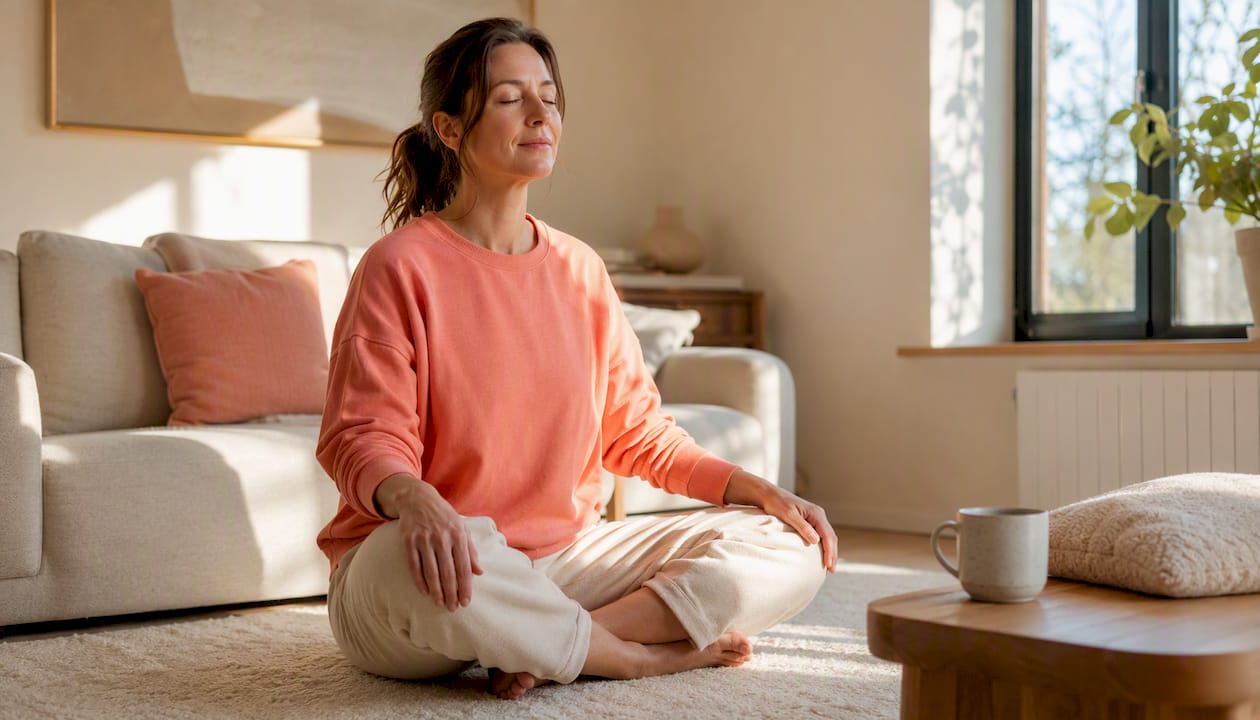
That shift matters enormously for anxiety. When you recognize "I'm having the thought that something bad will happen" rather than treating the thought as reality, the emotional charge weakens. Research shows that consistent mindfulness training reduces rumination and weakens the link between anxious thoughts and emotional reactivity, two of the core mechanisms driving generalized anxiety disorder.
Biologically, regular practice reduces amygdala reactivity and strengthens prefrontal regulation, the brain's capacity to modulate fear responses. The result is a nervous system that recovers faster from stress rather than staying stuck in high alert.
"Mindfulness-based interventions have demonstrated significant reductions in anxiety and depression symptoms across multiple randomized controlled trials, with effect sizes comparable to those of established psychological treatments." — PMC, National Institutes of Health
A 2026 randomized controlled trial published in Frontiers in Psychiatry found that an 8-week group mindfulness intervention adapted from MBCT, delivered alongside stable medication in adults with DSM-5 generalized anxiety disorder (N=106), produced significant reductions in anxiety severity compared to a control group. Separately, a landmark clinical comparison found that MBSR produced anxiety-reduction effects similar to the SSRI escitalopram, with fewer side effects in some participants.
Who benefits most? Adults with generalized anxiety, social anxiety, and stress-related symptoms tend to show the strongest response. People with active trauma, untreated psychosis, or severe depression may find that mindfulness temporarily increases distress before it helps, which is why a trauma-informed approach matters. More on that in the section on when to seek clinical support.
Mindfulness exercises you can use right now for anxiety
The practices below are organized by time: the quickest ones come first for acute moments, longer ones for building a daily foundation. Start with 1–3 minutes and build from there.
For acute anxiety or panic (under 3 minutes)
- Physiological sigh. Take a double inhale through your nose (a full breath, then a short sniff on top), then exhale slowly and completely through your mouth. Studies show this pattern rapidly reduces arousal and heart rate. Two or three cycles is enough.
- 5-4-3-2-1 grounding. Name 5 things you see, 4 you can touch, 3 you hear, 2 you smell, 1 you taste. Works especially well during anticipatory anxiety before a meeting or social situation.
- Noting. Label what's happening mentally: "planning," "worrying," "remembering." Use a single word, not a sentence. The label creates just enough distance to stop the spiral.
For general tension or daily practice (5–15 minutes)
- Breath awareness. Sit comfortably and place your attention on the physical sensation of breathing at your nostrils or belly. When your mind wanders (it will), gently return. That return is the practice, not a failure.
- Brief body scan. Starting at your feet, slowly move attention up through your body, noticing sensation without trying to change it. Even a 3-minute version can ease acute tension and works well as a daily micro-practice before sleep.
- Mindful walking. Walk slowly and notice the sensation of each foot lifting, moving, and landing. This is particularly useful if sitting still triggers anxiety, as the movement gives your nervous system something concrete to track.
- RAIN framework. Recognize the emotion, Allow it to be present, Investigate the body sensations with curiosity, and Nurture yourself with a kind phrase ("This is hard, and I can handle it"). RAIN is especially effective for shame-based or social anxiety.
- Mindful self-compassion statement. Place one hand on your chest and say silently: "This is a moment of suffering. Suffering is part of being human. May I be kind to myself right now." Sounds simple; the research on self-compassion and anxiety reduction is solid.
When to use which practice: Acute panic calls for the physiological sigh or grounding. General daily tension responds well to breath awareness or a body scan. Anticipatory worry before a specific event is where RAIN and self-compassion statements shine.
Pro Tip: If sitting still makes your anxiety spike, start with mindful walking or a body scan lying down. The anchor matters less than the act of returning attention to it. You are not doing it wrong.
What structured 8-week programs (MBSR and MBCT) look like
Self-guided practice gets you far, but structured programs offer something different: a replicable curriculum, group accountability, and a trained facilitator who can adapt practices when something isn't working.
MBSR (Mindfulness-Based Stress Reduction) is the most widely studied standardized mindfulness program in existence. Developed at the University of Massachusetts, it follows a fixed structure that researchers and clinicians have replicated across thousands of trials.
| Week | Format | Session length | Home practice |
|---|---|---|---|
| 1–7 | Weekly group class | ~2.5 hours | 15 min/day (formal + informal) |
| Week 8 | Full-day silent retreat | 6–7 hours | Continued daily practice |
| Post-program | Self-directed | Varies | Ongoing |
MBCT (Mindfulness-Based Cognitive Therapy) follows the same 8-week, weekly 2–2.5 hour session structure but layers in cognitive therapy techniques. Where MBSR focuses on stress reduction and present-moment awareness broadly, MBCT specifically targets the thought patterns that drive anxiety and depression relapse. It was originally developed for recurrent depression, but the 2026 RCT in Frontiers in Psychiatry confirms its adapted format significantly reduces anxiety in adults with GAD when delivered adjunctively.
MBSR vs. MBCT at a glance:
- MBSR suits adults with stress, general anxiety, chronic pain, or burnout who want a broad mindfulness foundation. It works well for working professionals managing high-pressure roles.
- MBCT suits adults with recurrent anxiety or depression who want explicit cognitive restructuring alongside mindfulness. It is often delivered in clinical settings and is particularly effective for preventing relapse.
Both programs are now available in remote formats. Recorded guided sessions and live video groups have made them accessible without requiring in-person attendance, which matters for adults with demanding schedules.
How to build a sustainable mindfulness practice for anxiety
Knowing the exercises is not the same as doing them consistently. Here is a practical 8-week ramp-up that works for most adults:
- Weeks 1–2: Micro-doses only. Two to five minutes of breath awareness each morning, right after you make coffee or brush your teeth. Pair it with something you already do. No apps required, though guided resources like Calm can help beginners stay on track.
- Weeks 3–4: Add a midday pause. Set a phone reminder for midday. Take 60 seconds to notice three breaths and do a quick body check: where is tension sitting right now? This informal practice builds the habit of checking in before anxiety escalates.
- Weeks 5–6: Extend the morning session to 10 minutes. Add a body scan or RAIN practice. If you miss a day, start again the next morning without self-judgment. Consistency over weeks matters more than perfection on any single day.
- Weeks 7–8: Introduce an evening wind-down. A 5-minute body scan before sleep reduces overnight rumination. By this point, you have a morning, midday, and evening anchor. That structure mirrors the formal and informal practice balance used in MBSR research protocols.
Troubleshooting common problems:
- Mind wandering constantly: This is not a problem. Noticing that your mind wandered and returning to the breath is the core skill. Beginners often fail by expecting immediate relaxation; the practice is the returning, not the stillness.
- Anxiety increases when you sit still: Switch to mindful walking or a body scan lying down. Some people, particularly those with trauma histories, find stillness activating at first. A trauma-informed approach to mindfulness adjusts the anchor and posture to reduce this.
- No time: Short, frequent sessions are more sustainable than long, infrequent ones. Two minutes daily beats 30 minutes once a week. Integrate practice into existing routines rather than carving out separate time.
Pro Tip: Employer-sponsored mental health programs increasingly include group mindfulness offerings. If you work for a mid-size or large company, check whether your HR department has an employee mental health program that includes structured MBIs before paying out of pocket.
When mindfulness alone isn't enough: signs you need clinical support
Mindfulness is a powerful tool, but it is not a substitute for clinical care when anxiety is severe, persistent, or tied to trauma.
Seek professional support when:
- Anxiety is interfering with work, relationships, or daily functioning for more than two weeks.
- You are experiencing panic attacks, especially if they are unpredictable or increasing in frequency.
- Mindfulness practice consistently triggers distressing memories, dissociation, or a significant spike in anxiety rather than gradual relief.
- You are having thoughts of self-harm or suicide. This is a medical emergency: contact the 988 Suicide and Crisis Lifeline by calling or texting 988.
- You have tried consistent mindfulness practice for 4–6 weeks with no improvement.
Questions to ask a clinician about integrating mindfulness:
- Are you trained in MBCT, MBSR, or another structured mindfulness-based intervention?
- Do you use a trauma-informed approach when introducing mindfulness practices?
- Can mindfulness be part of my treatment plan alongside medication management if needed?
- Do you offer group-based mindfulness programs, or can you refer me to one?
Next steps if you are ready to seek care:
- Write down your three most disruptive anxiety symptoms before your first appointment.
- Note how long symptoms have been present and whether they are worsening.
- Bring a list of any current medications or supplements.
- Ask about telehealth options if in-person attendance is a barrier.
Integrated treatment, combining mindfulness with individual therapy, group programs, and medication management when appropriate, consistently outperforms any single approach for moderate to severe anxiety. The goal is not to choose between mindfulness and clinical care but to use both strategically.
This article is general information, not medical or clinical advice. Confirm current treatment options with a licensed mental health professional.

Key Takeaways
Mindfulness reduces anxiety through metacognitive awareness and nervous system regulation, and consistent daily practice over 8 weeks produces the most reliable, lasting results.
| Point | Details |
|---|---|
| Start immediately | The physiological sigh and 5-4-3-2-1 grounding work within seconds for acute anxiety. |
| Build gradually | Two to five minutes daily in weeks 1–2 is enough; extend to 10 minutes by weeks 5–8. |
| Structured programs work | MBSR and MBCT both use an 8-week, weekly 2–2.5 hour format shown in RCTs to significantly reduce anxiety. |
| Know the red flags | Panic attacks, functional impairment, or trauma triggers mean mindfulness should be combined with clinical care. |
| Kin-wellness offers clinical support | Kin-wellness provides virtual outpatient therapy, group programs, and medication management for adults in California who need clinician-supported mindfulness care. |
Why Kin-wellness recommends this approach
At Kin-wellness, we work with working professionals, parents, executives, and healthcare workers who arrive carrying anxiety they have often managed alone for years. What we see consistently is that the people who make the most progress are not the ones who meditate perfectly. They are the ones who combine a daily mindfulness practice with structured clinical support, whether that is individual therapy, a group program, or medication management when warranted.
The exercises in this guide reflect the same evidence-based practices our licensed therapists integrate into outpatient care. MBSR and MBCT are not fringe approaches; they are the most replicated mindfulness interventions in clinical psychiatry, and our clinicians are trained to adapt them for clients who have trauma histories or panic-sensitive presentations. For those clients especially, a trauma-informed adjustment to how mindfulness is introduced makes a real difference in whether the practice helps or temporarily heightens distress.
Mindfulness is a clinical tool, not a wellness trend. Used well, inside a care plan built around your specific anxiety profile, it changes how your nervous system responds to stress over time.
Kin-wellness can support your next step
If you want clinician-supported mindfulness, Kin-wellness offers virtual outpatient mental health services for adults in California, including individual therapy, group therapy, EMDR, and medication management, all delivered by licensed therapists and prescribers.

What that looks like in practice: a licensed clinician who understands both the evidence behind MBSR and MBCT and the realities of a packed schedule. Sessions are available via telehealth, so there is no commute and no waiting room. Insurance billing support is included, and the team works with PPO and HMO plans as well as private-pay clients.
Getting started takes three steps: visit Kin-wellness services to review available programs, book a consultation, and bring the symptom notes you prepared using the checklist above. From there, a clinician will help you build a care plan that integrates mindfulness with whatever level of clinical support your situation actually calls for.
If anxiety has been running the show long enough, book a consultation with Kin-wellness and find out what structured, clinician-supported care looks like for you.
Useful sources and further reading
The sources below were used to build this guide. Each one is worth bookmarking if you want to go deeper on the evidence or find a structured program.
| Source | Why it's useful |
|---|---|
| Frontiers in Psychiatry: 2026 RCT on MBCT-adapted group intervention for GAD | Primary trial evidence for 8-week group mindfulness reducing anxiety in adults with GAD; N=106, peer-reviewed. |
| PMC / NIH: Mindfulness-Based Interventions for Anxiety and Depression | Systematic review of RCT evidence; best single source for understanding effect sizes and clinical populations. |
| Brown University: MBSR Program Overview | Authoritative description of the MBSR curriculum, session structure, and retreat format. |
| Simply Psychology: Mindfulness for Anxiety Beginner's Guide | Clinically reviewed summary covering mechanisms, techniques, and comparative trial evidence. |
| Mindful.org: What Is Mindfulness? | Accessible primer on metacognitive awareness and practitioner guidance on realistic expectations. |
| Calm Blog: Meditation for Stress | Practical technique summaries and app-based guided meditation recommendations for beginners. |
| British Heart Foundation: 3-Minute Mindful Meditation | Short body-scan script and validation of micro-practice for stress relief from a health organization. |