
Work burnout treatment works best when it combines evidence-based therapy with deliberate recovery actions and, in many cases, professional clinical support. The four therapeutic approaches with the strongest research backing are Mindfulness-Based Stress Reduction (MBSR), Cognitive Behavioral Therapy (CBT), Acceptance and Commitment Therapy (ACT), and Rational Emotive Behavior Therapy (REBT). None of these is a universal fix. The right starting point depends on what is driving your burnout, which is why a personalized assessment matters before committing to any single approach.
Key components of an effective burnout treatment plan include:
-
Therapeutic intervention matched to your specific burnout drivers
-
Sleep restoration, often requiring structured clinical support
-
Clear work boundaries and workload reduction where possible
-
Physical recovery through exercise, nutrition, and genuine rest
-
Professional support including therapy, medication management, or intensive outpatient care when needed
Table of Contents
What is work burnout, and how do you recognize it?
Burnout is not simply being tired after a hard week. It is a multi-dimensional depletion of emotional, cognitive, physical, and motivational resources that builds over time and does not resolve with a weekend off. The World Health Organization classifies it as an occupational phenomenon, not a medical diagnosis, though its effects are very real and measurable.
Common symptoms of work burnout include:
-
Persistent exhaustion that sleep does not fully relieve
-
Cynicism or detachment from your work, colleagues, or purpose
-
Reduced performance and difficulty concentrating on tasks you once handled easily
-
Sleep disturbances, including insomnia or waking unrefreshed
-
Physical symptoms such as headaches, muscle tension, or frequent illness
-
Emotional blunting, where work feels meaningless or you feel disconnected from outcomes
One useful distinction: burnout tends to produce emotional numbness and cynicism, while depression more often involves pervasive sadness and hopelessness across all life domains. That said, the two frequently co-occur, which is one reason professional evaluation is worth pursuing rather than self-diagnosing.
What causes work burnout, and who is most at risk?

Burnout rarely has a single cause. Research consistently points to a combination of workplace conditions and individual vulnerabilities that, together, erode a person’s capacity to cope.
Workplace risk factors include:
-
Excessive workload with no realistic path to completion
-
Lack of control over decisions, schedule, or how work gets done
-
Insufficient recognition or reward for effort and results
-
Breakdown in community, including conflict, isolation, or a toxic team culture
-
Perceived unfairness in how people are treated or evaluated
-
Value conflicts between personal ethics and what the job requires
On the individual side, perfectionism is one of the strongest predictors of burnout. People who tie their self-worth to productivity, struggle to delegate, or cannot set limits on availability tend to accumulate stress faster than they can discharge it. Healthcare workers, executives, and parents managing dual demands face compounding pressures that accelerate this process.
Evidence-based therapies that treat burnout effectively
Psychotherapeutic interventions including MBSR, CBT, ACT, and REBT have demonstrated effectiveness in reducing burnout symptoms and supporting long-term mental health improvements. Here is what each approach actually does:
-
Mindfulness-Based Stress Reduction (MBSR): An eight-week structured program that trains attention and present-moment awareness. MBSR is particularly effective at reducing emotional exhaustion and the physiological stress response. It works best for people whose burnout is driven by chronic overactivation and difficulty disengaging from work mentally.
-
Cognitive Behavioral Therapy (CBT): Targets the thought patterns and behaviors that sustain burnout. A CBT therapist helps you identify distorted beliefs (“I have to say yes to everything or I’ll fail”) and replace them with more accurate, functional ones. CBT also addresses avoidance behaviors and helps rebuild structured daily routines.
-
Acceptance and Commitment Therapy (ACT): Rather than challenging negative thoughts directly, ACT teaches psychological flexibility. You learn to observe difficult thoughts without being controlled by them, and to reconnect with personal values as a guide for behavior. This approach is especially useful when burnout has produced a sense of meaninglessness or disconnection from purpose.
-
Rational Emotive Behavior Therapy (REBT): Focuses on identifying and disputing irrational core beliefs, such as “I must be perfect or I am worthless,” that drive chronic overwork and self-criticism. REBT tends to be direct and structured, making it a good fit for people who want a clear framework for examining their thinking.
Individualized therapy selection is important because burnout root causes vary significantly from person to person. ACT may be ideal for someone struggling with value alignment, while CBT for Insomnia may be the priority for someone whose sleep has collapsed. A licensed therapist can assess which modality fits your specific situation.
Pro Tip: Third-wave cognitive behavioral therapies, including mindfulness-based methods, show strong results for emotional exhaustion and depersonalization. However, research suggests they have limited effect on restoring a sense of personal accomplishment without accompanying organizational changes. Therapy alone may not be enough if your workplace conditions remain unchanged.
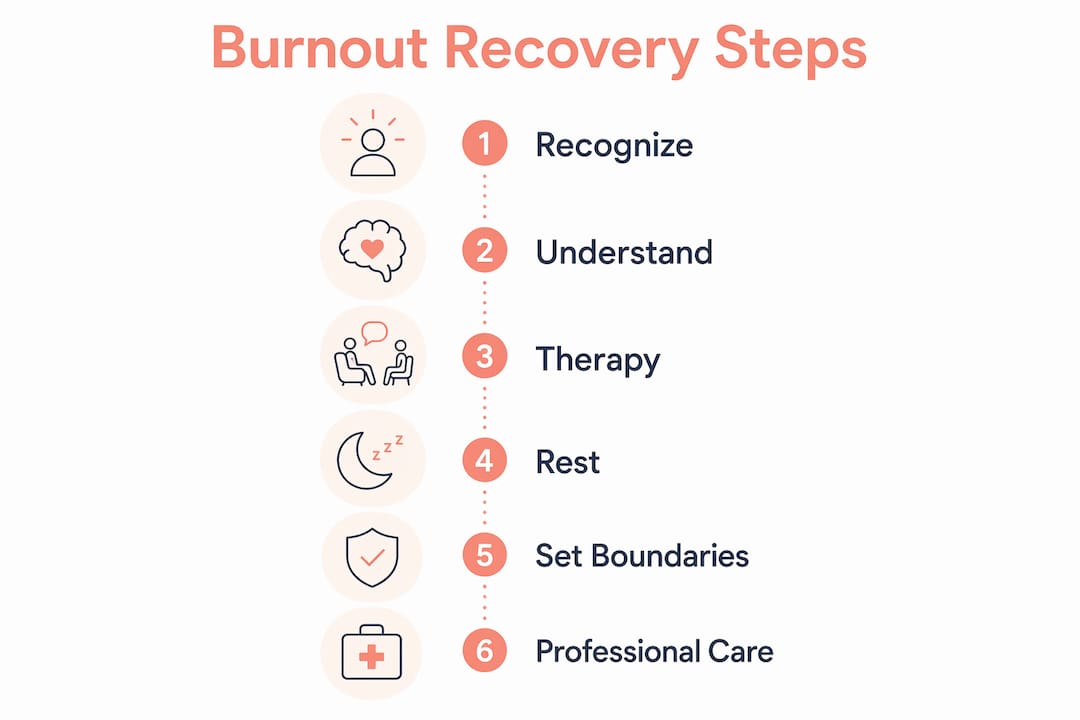
Practical recovery strategies you can start using now
Recovery from burnout is not a passive process, and it does not happen on its own while you keep working at the same pace. These strategies support the therapeutic work and accelerate physical and emotional repair.

Rest that actually restores. Real recovery requires unstructured, unpressured time rather than turning relaxation into another productivity task. Scheduling a vacation and then filling it with optimized activities misses the point entirely. The nervous system needs genuine downtime with no performance expectations attached.
Prioritize sleep above almost everything else. Sleep disruption is one of the most common and most damaging obstacles to burnout recovery. If you are waking at 3 AM with racing thoughts or lying awake for hours, increased sleep duration alone will not fix it. CBT for Insomnia (CBT-I) is a structured clinical approach that addresses the cognitive and behavioral patterns maintaining poor sleep, and it is more effective than sleep hygiene tips alone.
Set boundaries that have actual consequences. Telling yourself you will stop checking email after 7 PM is not a boundary. A boundary is a decision backed by a consistent action. This might mean turning off notifications, communicating availability limits to your manager in writing, or declining projects that exceed your current capacity. Combining personal therapy with organizational changes like clearer role expectations and workload adjustments produces more durable results than therapy alone.
Additional recovery strategies worth building into your routine:
-
Exercise regularly, even at low intensity. Physical movement is one of the most reliable regulators of the stress response.
-
Rebuild social connection outside of work. Burnout often narrows identity to professional role, which makes recovery harder.
-
Eat consistently and avoid using caffeine or alcohol to manage energy and anxiety.
-
Diversify your identity beyond what you do for a living. Hobbies, relationships, and creative pursuits rebuild the psychological reserves that burnout depletes.
Professional treatment options at Kin-wellness
When burnout has progressed to the point where daily functioning is impaired, self-directed strategies are not enough on their own. That is when structured professional care makes the difference between slow, uncertain recovery and a clear clinical path forward.
Kin-wellness offers specialized outpatient and intensive outpatient mental health services designed specifically for adults navigating work burnout. Services are delivered by licensed therapists and prescribers and include:
-
Individual therapy using evidence-based modalities including CBT, ACT, and EMDR
-
Group therapy for peer support and shared recovery strategies
-
Family therapy when burnout is affecting home relationships
-
EMDR therapy, available in person or via telehealth, for trauma-related contributors to burnout
-
Medication management for co-occurring anxiety, depression, or sleep disorders
-
Aftercare planning to sustain gains after the intensive phase of treatment
Kin-wellness works with PPO and HMO insurance plans and supports out-of-network benefits, which removes a significant barrier for working professionals who assume clinical care is out of reach financially. Telehealth options mean you do not have to take time off work to access care.
Sustainable burnout recovery depends on more than willpower and rest. Integrated clinical care, combining therapy, medication management when appropriate, and structured aftercare, gives adults the support structure that self-directed recovery rarely provides on its own.
Burnout recovery typically takes 3–12 months, with progressive improvements in symptoms, cognitive function, and motivation across that period. Starting sooner shortens that timeline.
Kin-wellness offers a clinical path out of burnout
If you have read this far, you are probably past the point of wondering whether what you are experiencing is burnout. The question now is what to do about it.

Kin-wellness provides outpatient and intensive outpatient mental health care built for working professionals, parents, executives, and healthcare workers who need real clinical support, not just a wellness app or a self-help checklist. The team includes licensed therapists and prescribers who use the same evidence-based approaches covered in this article: CBT, ACT, EMDR, and medication management when clinically appropriate. Insurance billing support is built into the process, and telehealth availability means care fits around your schedule rather than the other way around.
If you are ready to move from managing symptoms to actually recovering, explore Kin-wellness services and take the first step toward a structured treatment plan.
Key Takeaways
Effective work burnout treatment combines evidence-based therapy, genuine rest, boundary-setting, and professional clinical support tailored to individual burnout drivers.
| Point | Details |
|---|---|
| Four core therapies | MBSR, CBT, ACT, and REBT are the most research-supported approaches for reducing burnout symptoms. |
| Therapy alone has limits | Mindfulness-based methods reduce exhaustion but have limited effect on personal accomplishment without workplace changes. |
| Sleep needs clinical attention | CBT for Insomnia addresses the cognitive patterns maintaining poor sleep, not just sleep duration. |
| Recovery takes time | Burnout recovery typically takes 3–12 months, with progressive improvements across that period. |
| Kin-wellness provides structured care | Kin-wellness offers outpatient and intensive outpatient services including therapy, EMDR, and medication management for adults with work burnout. |