

Family therapy improves how people in the same household communicate, resolve conflict, and support each other through hard times. The evidence is clear: structured family-based treatment reduces emotional distress, strengthens relationships, and produces measurable behavioral change across a wide range of problems. A 2025 meta-analysis reported a post-treatment effect size that indicates meaningful improvement for child-focused psychiatric problems, a meaningful improvement compared to control conditions. SAMHSA also notes that family therapy benefits everyone in the household, not just the person identified as needing care, and actively reduces relapse risk for substance-related problems.
The core family therapy benefits, backed by clinical research, include:
- Improved communication between family members, including parents and adolescents
- Conflict resolution skills that reduce recurring arguments and blame cycles
- Emotional support that lowers anxiety and increases empathy across the household
- Behavioral improvement in children and adolescents with conduct or mood problems
- Reduced relapse risk for substance use disorders when family members are engaged in treatment
If your family is stuck in the same argument on repeat, struggling through a major transition, or watching one member's mental health affect everyone else, family therapy is worth a serious look.
Key Takeaways
Family therapy produces measurable improvements in communication, conflict resolution, and behavioral outcomes for a wide range of family situations, with the strongest evidence for child and adolescent problems, substance use, and relationship distress.
| Point | Details |
|---|---|
| Evidence is solid | A 2025 meta-analysis found a post-treatment effect size that indicates meaningful improvement for child-focused psychiatric problems, a meaningful improvement over controls. |
| Benefits extend beyond one person | Family therapy reduces relapse risk and improves outcomes for the whole household, not just the identified patient. |
| Model and therapist matter | Structured models (MST, FFT, psychoeducational) have the strongest evidence; ask any therapist which model they use and why. |
| Timeline varies | Brief models run 6–12 sessions; complex or chronic conditions often require 20 or more sessions with a maintenance phase. |
| Kin-wellness offers a structured path | Kin-wellness provides outpatient and telehealth family therapy in California and Arizona, with insurance billing support and coordinated care. |
Table of Contents
- What family therapy is and why it focuses on the whole system
- The concrete benefits families typically see
- The main models and techniques therapists use
- Who benefits most from family therapy
- What actually happens in family therapy sessions
- What the research says about how well family therapy works
- How long family therapy takes and when you notice change
- When family therapy may not help and what to watch for
- How to find a qualified family therapist
- How Kin-wellness structures outpatient family therapy
- Kin-wellness: outpatient family therapy for California adults
- What most articles about family therapy get wrong
- Sources
What family therapy is and why it focuses on the whole system
Family therapy is a form of structured psychotherapy that targets interaction patterns between family members rather than treating one person's symptoms in isolation. A clinical review published in PMC describes it as focused on the maintenance and resolution of problems across the relational system, which means the therapist is looking at how people respond to each other, not searching for a single root cause inside one individual. That shift alone tends to reduce blame and increase everyone's willingness to engage.
The primary goals of family therapy are:
- Improve communication so family members can express needs without triggering defensiveness
- Resolve conflict by interrupting patterns that keep the same fights recurring
- Strengthen problem-solving so the family can handle future stress without a therapist present
- Set healthy boundaries between generations, roles, and individuals
- Increase mutual support so members feel less isolated during difficult periods
The contrast with individual therapy matters here. Individual therapy focuses on one person's internal experience, history, and coping. Family therapy treats the relational field, the space between people, as the primary unit of change. Both can be valuable, and they often work best in combination. But when a child's anxiety is feeding off a parent's unresolved conflict, or when a parent's recovery from addiction depends on the household environment, the family-level focus is what actually moves the needle.
The concrete benefits families typically see
The advantages of family therapy show up across four domains: emotional, relational, behavioral, and practical.
Emotionally, family therapy tends to reduce anxiety and depression symptoms for multiple members at once. When one person in the household is struggling, the stress radiates outward. Therapy creates a structured space where that stress can be named, distributed, and addressed collectively rather than absorbed silently by whoever is most resilient.
Relationally, families often report clearer roles and better co-parenting after treatment. Parents who disagree on discipline, for example, frequently leave sessions with a shared framework rather than competing strategies that undermine each other in front of the kids.

Behaviorally, the Medical News Today overview notes that family counseling can improve parenting skills and strengthen family closeness across a range of problems, from infant sleep and feeding difficulties to recovery from abuse and neglect, externalizing behavior, and eating disorders. For substance use specifically, SAMHSA's guidance is direct: family involvement mobilizes support, improves treatment engagement, and reduces the likelihood of relapse.
Practically, family therapy can improve care coordination when a member is managing a chronic illness. A family that understands a diagnosis together, knows what symptoms to watch for, and has agreed-upon roles during a crisis is far better positioned than one where that knowledge sits with only one caregiver.
Research also shows that family-based interventions can produce medical cost offsets and, in some studies, are more cost-effective than individual therapy alone, which matters when families are weighing the investment.
A few concrete scenarios: A teenager with depression whose parents are in conflict at home often sees limited progress in individual therapy until the household dynamic shifts. A couple navigating a cancer diagnosis together in family sessions typically reports better communication with medical teams and less caregiver burnout. A family in early recovery from a member's alcohol use disorder that participates in family therapy is more likely to maintain sobriety gains than one that leaves the household environment unchanged.
The main models and techniques therapists use
Family therapy is not one method. It is a field with several well-researched models, each suited to different problems and family structures.
| Model | Typical uses | Session features |
|---|---|---|
| Structural family therapy | Boundary problems, enmeshment, disengagement, parenting hierarchy issues | Enactment, live restructuring of interactions in session |
| Strategic family therapy | Resistant families, recurring symptom cycles | Reframing, directives, paradoxical interventions |
| Multisystemic Therapy (MST) | Adolescent conduct problems, juvenile justice involvement | Home and community-based, intensive, multi-system coordination |
| Functional Family Therapy (FFT) | Adolescent behavioral problems, early substance use | Engagement, motivation, behavior change, generalization phases |
| Cognitive-behavioral family therapy | Anxiety, depression, OCD in family context | Psychoeducation, thought records, behavioral experiments with family |
| Psychoeducational family therapy | Schizophrenia, bipolar disorder, chronic illness | Education about diagnosis, communication skills, relapse prevention |
| Narrative family therapy | Identity problems, trauma, cultural conflict | Externalizing the problem, re-authoring stories |
Across all these models, therapists draw from a shared toolkit of techniques. Reframing repositions a problem so the family sees it differently, reducing blame. Role-play and enactment let families practice new interaction patterns in real time rather than just talking about them. Communication training teaches specific skills, like active listening and "I" statements, that families can use outside sessions. Homework and behavioral contracting increase follow-through between appointments. Psychoeducation gives families accurate information about a diagnosis so they stop filling the gap with fear or misinformation.
Pro Tip: When you meet with a potential therapist for the first time, ask directly: "Which model do you use, and why does it fit our situation?" A skilled clinician should be able to name their approach, explain the evidence behind it, and describe what the first few sessions will look like. Vague answers about "whatever works" are worth probing further.
Who benefits most from family therapy
Family therapy is a strong fit for a wide range of situations, but it is not the right primary treatment for every problem.
Common indications:
- Divorce, separation, or blended-family transitions
- Grief and bereavement affecting multiple family members
- A family member's chronic illness or disability
- Substance use disorder, especially when the household environment affects recovery
- Child or adolescent behavioral problems, including conduct disorder, ADHD-related conflict, and school refusal
- Adolescent depression, anxiety, or eating disorders
- Parenting disagreements that have become entrenched
- Communication breakdown between partners or between parents and adult children
- Trauma that has affected the family system (abuse, accident, community violence)
When family therapy is not the right primary treatment:
Family therapy is not a substitute for crisis intervention. If a family member is in acute danger, expressing active suicidal intent, or requires medical stabilization, the first step is emergency care, not a scheduled therapy session. Similarly, active domestic violence situations require individual safety planning before any conjoint family work begins. Family therapy also works best when all key members are willing to participate; a single resistant member does not automatically disqualify the process, but it does affect what is achievable.
For families where one member has a severe psychiatric condition requiring intensive individual treatment, family therapy often works best as an adjunct, not a replacement, for that individual care.
What actually happens in family therapy sessions
The process follows a recognizable arc, though the pace varies by model and family complexity.
A typical session sequence:
- Intake and assessment — The therapist gathers history, identifies the presenting problem, and maps the family structure (who lives together, key relationships, recent stressors).
- Pattern identification — Over the first few sessions, the therapist observes and names recurring interaction patterns: who escalates, who withdraws, who mediates, who carries the symptom.
- Goal-setting — The family and therapist agree on specific, measurable goals. "Better communication" becomes "each person speaks without interruption for two minutes before the other responds."
- Interventions — The therapist introduces techniques matched to the model: enactment, reframing, communication exercises, psychoeducation, or homework assignments.
- Between-session practice — Families are often given tasks to try at home. This is where real change tends to consolidate.
- Review and adjustment — Progress is assessed regularly. Goals shift as the family changes.
The therapist's role is facilitator and coach, not judge or arbitrator. They are not there to decide who is right in a family argument. Children and adolescents participate differently than adults; a skilled therapist adjusts the session structure so younger members can contribute without feeling put on the spot.
Before the first session, bring:
- A brief timeline of recent significant events (moves, losses, diagnoses, school changes)
- Your insurance card and a photo ID
- Any questions you have written down in advance
- A realistic sense of what you hope will be different in three months
On confidentiality: family therapy has specific rules. The therapist typically explains at the start who can access session content, how information shared by one member is handled with others, and what the mandatory reporting exceptions are (child abuse, imminent safety risk). Ask about this directly if it is not covered in the first session.
What the research says about how well family therapy works
The evidence base for family therapy is substantial, though it varies by problem type and population.
For child and adolescent problems, a 2025 systematic review by Carr reported a post-treatment effect size that indicates meaningful improvement across child-focused psychiatric problems, a small-to-medium effect that translates to meaningfully higher improvement rates compared to control conditions. Systemic therapies also show evidence of outperforming treatment-as-usual for adolescent substance use and conduct problems when delivered as part of multimodal programs.
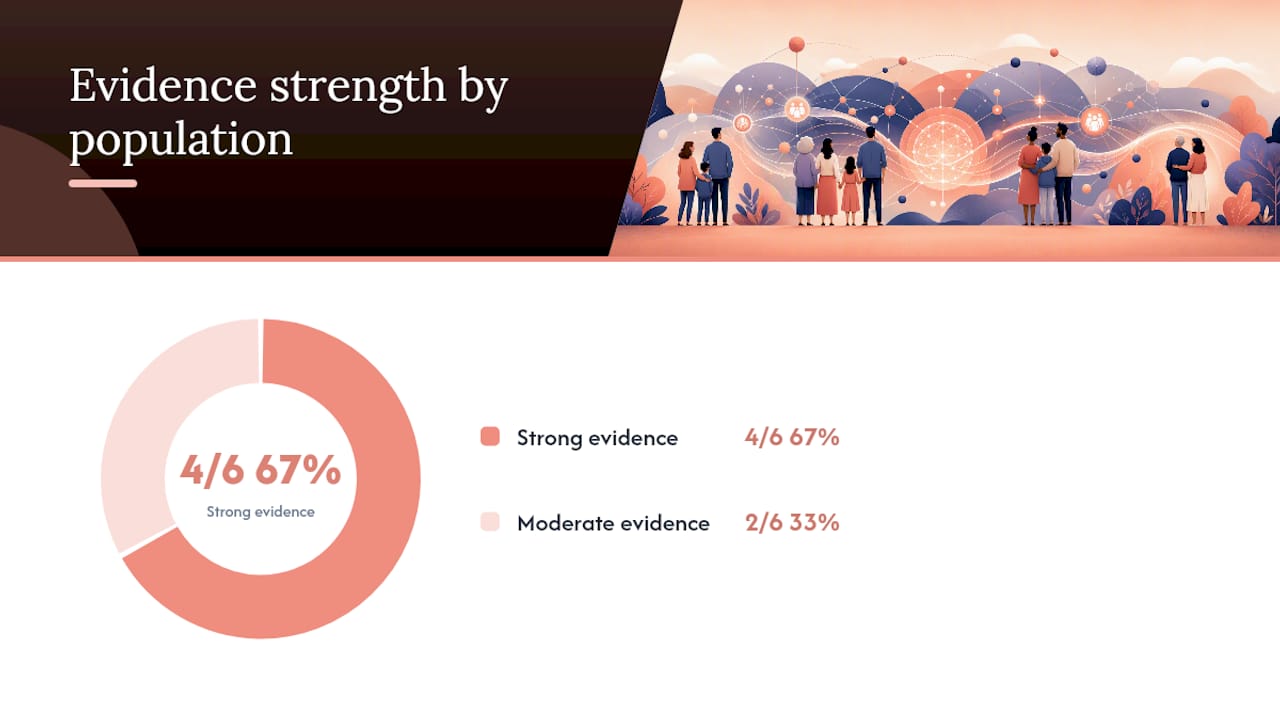
For adult-focused problems, research on couple and family therapy shows effectiveness across relationship distress, mood disorders, anxiety, substance problems, psychosis, and adaptation to chronic physical illness. The evidence is strongest for relationship distress and substance use; it is more mixed for severe personality disorders and some chronic psychiatric conditions.
| Population | Evidence strength | Typical outcome |
|---|---|---|
| Child/adolescent behavioral problems | Strong (multiple meta-analyses) | Reduced conduct problems, improved family functioning |
| Adolescent substance use | Strong | Reduced use, better treatment retention |
| Adult relationship distress | Strong | Improved satisfaction, reduced conflict |
| Adult mood and anxiety disorders | Moderate | Symptom reduction, improved family support |
| Chronic illness adaptation | Moderate | Better coping, reduced caregiver burden |
| Psychosis (family psychoeducation) | Strong | Reduced relapse rates |
Research limitations: Most studies use therapist-reported or self-reported outcomes, and follow-up periods vary widely. Effect sizes in research settings may be larger than those in routine clinical practice. The evidence is also stronger for manualized, structured models (MST, FFT, psychoeducational approaches) than for eclectic or integrative practice.
How long family therapy takes and when you notice change
Duration depends heavily on the problem, the model, and the family's starting point.
- Brief models (strategic, solution-focused) typically run 6–12 sessions and target specific, circumscribed problems.
- Moderate-length treatment (structural, CBT-informed) often runs 12–20 sessions for more complex relational patterns.
- Extended treatment for chronic or severe conditions, such as schizophrenia with family psychoeducation or long-standing trauma, can require more than 20 sessions and sometimes continues in a maintenance phase.
Families typically notice early signals of change within the first 4–6 sessions: a conflict that de-escalated faster than usual, a conversation that stayed productive, a child who seemed less reactive at dinner. These are not proof that the work is done; they are signs the new patterns are taking hold.
Pro Tip: Set two or three specific, observable goals at the start of treatment and revisit them every four sessions. "We want to get through a disagreement about homework without anyone leaving the room" is trackable. "Better communication" is not. Simple weekly check-ins, even a five-minute conversation on Sunday evenings, help families notice progress between sessions rather than waiting for the therapist to tell them things are improving.
If you are combining family therapy with an intensive outpatient program, understanding how to fit treatment into your schedule is a practical first step before committing to a start date.
When family therapy may not help and what to watch for
Family therapy is not a guaranteed fix, and being honest about its limits is part of making a good decision.
Situations where family therapy may not be sufficient or appropriate:
- Entrenched patterns with decades of history rarely resolve in 8–10 sessions; expect a longer commitment or more modest goals.
- If one or more members are unwilling to attend or actively sabotage sessions, progress is limited.
- Evidence is mixed for some problem types, particularly severe personality disorders and certain chronic psychiatric conditions where individual or pharmacological treatment is the primary lever.
- The quality of the therapist matters enormously. Family therapy delivered by a poorly trained or culturally unresponsive clinician can surface conflict without providing tools to manage it.
- Telehealth family therapy works well for many families but may be less effective for highly volatile situations where in-person containment is clinically important.
Safety red flag: If any family member discloses abuse, expresses active suicidal intent, or describes a situation involving immediate physical danger during a session, the therapist is obligated to address safety first. Conjoint family sessions should pause until individual safety is established. Do not let a commitment to "keeping the family in therapy together" override a member's immediate need for individual crisis care.
How to find a qualified family therapist
Credentials matter. Look for these licenses and training backgrounds:
- LMFT (Licensed Marriage and Family Therapist): the most directly relevant credential; training centers on systemic and relational approaches.
- LCSW (Licensed Clinical Social Worker): broad clinical training; many specialize in family systems.
- PhD or PsyD in clinical or counseling psychology with a family systems specialization.
- Training in specific models: ask whether the therapist has formal training in a named model (MST, FFT, structural, psychoeducational) rather than just "family therapy experience."
Ten questions to ask in a consultation:
- Which therapeutic model do you use with families, and why?
- What experience do you have with our specific presenting problem?
- How many sessions do you typically recommend for a situation like ours?
- Do you offer telehealth, in-person, or both?
- How do you handle it when one family member refuses to attend?
- What does a typical session look like for a family at our stage?
- How do you measure progress?
- Do you accept our insurance, and how does billing work?
- What is your approach to cultural differences within the family or between the family and you?
- What happens if we feel stuck or the therapy is not working?
Red flags during intake:
- No clear treatment plan after the first two sessions
- Dismissive of safety concerns or minimizing of disclosed abuse
- Consistently taking sides or assigning blame to one member
- Poor cultural responsiveness or assumptions based on family structure
- Reluctance to discuss credentials or training
Insurance and logistics checklist:
- Confirm whether the therapist is in-network for your plan (PPO, HMO, or out-of-network benefits)
- Ask about session length (typically 50–90 minutes for family sessions) and frequency
- Check whether telehealth sessions are covered at the same rate as in-person
- For California families comparing plans, understanding how Kaiser and Blue Shield handle virtual therapy can save significant out-of-pocket cost
How Kin-wellness structures outpatient family therapy
Kin-wellness offers outpatient and intensive outpatient mental health services in California and Arizona, with telehealth available for adults who cannot attend in person. Family therapy at Kin-wellness is delivered by licensed clinicians (LMFTs, LCSWs, and prescribers) within a trauma-informed care framework, and the program is designed to coordinate individual, family, and medication management services under one care team.
Program features:
- Insurance billing support for PPO and HMO plans, including out-of-network benefit navigation
- Flexible scheduling designed for working professionals, parents, and healthcare workers
- Telehealth and in-person EMDR therapy available alongside family sessions
- Coordinated care: family therapy can run concurrently with individual therapy and medication management
- Aftercare planning built into the treatment arc, so families leave with a maintenance plan
Pro Tip: If you are a working professional or a parent managing a demanding schedule, ask Kin-wellness about evening and weekend availability before assuming family therapy will not fit. Outpatient programs designed for working adults are built around that constraint.
Kin-wellness is one example of how outpatient family therapy can be structured. The right program for your family depends on your specific situation, insurance coverage, and geographic access. What matters most is finding a licensed clinician with training in a relevant model and a clear plan for your presenting problem.
Kin-wellness: outpatient family therapy for California adults
Family therapy works best when the clinical team understands the full picture: your schedule, your insurance, your family's specific dynamics, and the evidence behind the approach they are recommending. Kin-wellness was built for exactly this kind of complexity.

Working professionals, parents, executives, and healthcare workers in California and Arizona can access Kin-wellness's full range of services, including outpatient family therapy, individual therapy, EMDR, medication management, and intensive outpatient programs, through telehealth or in person. The care team handles insurance verification and billing so the first conversation can focus on your family's needs rather than paperwork.
The research is clear that family therapy produces real, measurable change. The practical barrier for most families is finding a program that fits their life. Kin-wellness is designed to remove that barrier. Schedule a consultation to find out which services fit your situation and what your insurance will cover.
What most articles about family therapy get wrong
The standard framing treats family therapy as a last resort, something you try after everything else has failed. That framing is backwards, and the research does not support it.
The evidence for family therapy is strongest precisely for the problems families tend to bring to it earliest: adolescent behavioral issues, parenting conflict, a household adjusting to a member's mental health diagnosis. Waiting until the situation is a full crisis does not improve outcomes. It usually means more sessions, more entrenched patterns, and a harder road back.
The other thing most articles understate is the cost-effectiveness argument. Individual therapy is the default recommendation, but for problems that are fundamentally relational, treating one person while leaving the system unchanged is often the less efficient choice. The research on medical cost offsets makes this point plainly: family-based approaches can outperform individual treatment on cost when the problem is embedded in the household dynamic.
What I would tell any parent or adult considering this: the model matters more than most people realize. "Family therapy" is not one thing. A therapist using Multisystemic Therapy for an adolescent with conduct problems is doing something categorically different from a therapist using a narrative approach for a family processing grief. Ask the specific question. If the therapist cannot name their model and explain why it fits your situation, keep looking.
For working professionals managing both a demanding career and a family in distress, the overlap between personal stress and family dynamics is real and often underaddressed. Family therapy that accounts for that context, rather than treating the family in a vacuum, tends to produce more durable results.
Sources
- Family Interventions: Basic Principles and Techniques - PMC
- Family Therapy Can Help - SAMHSA Library
- Family therapy and systemic interventions for child‐focussed problems: The evidence base - Carr - 2025 - Journal of Family Therapy - Wiley Online Library
- Ncbi
- Benefits of Family Counseling and How It Works - Medical News Today