
If you want to keep your current therapist, a broad-network PPO or EPO plan gives you the flexibility to do it. If you'd rather have coordinated, in-network virtual care with simpler billing, an integrated HMO model is the cleaner path.
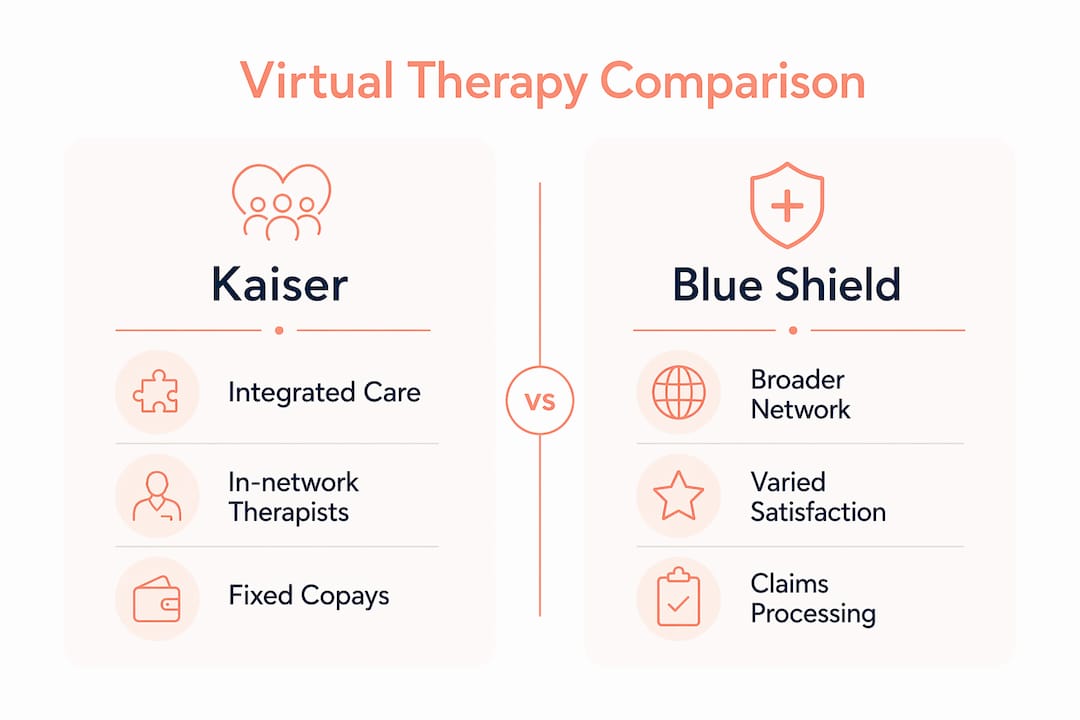
- Network flexibility: Blue Shield PPO plans let you see out-of-network therapists; Kaiser's closed network means your clinician must be a Kaiser employee.
- Referrals: Blue Shield PPO members can book a therapist directly. Kaiser typically routes mental health access through its internal referral process.
- Telehealth coverage: Both cover virtual outpatient therapy, but Kaiser delivers it through Kaiser-employed clinicians; Blue Shield connects you to independent contracted providers.
- Cost tradeoff: Kaiser premiums tend to be lower than comparable PPO plans; Blue Shield PPOs generally cost more but include out-of-network coverage.
Check your member portal or call your insurer today. Kin Wellness also accepts insurance and can verify your telehealth benefits before your first session.
Table of Contents
- Kaiser vs Blue Shield: side-by-side for virtual outpatient therapy
- How do members rate virtual mental health care at each insurer?
- Does your insurer cover CBT, DBT, and other evidence-based therapies?
- How easy is it to find a behavioral health provider in California?
- What are the out-of-pocket maximums for mental health benefits?
- Does your plan cover group therapy or peer support?
- How do claims and reimbursements work for virtual therapy?
- Kin Wellness makes insurance verification simple for virtual therapy
Kaiser vs Blue Shield: side-by-side for virtual outpatient therapy
| Dimension | Kaiser Permanente | Blue Shield of California | Kin Wellness |
|---|---|---|---|
| Plan types | HMO, EPO, POS | HMO, PPO, EPO | Works with PPO/HMO out-of-network benefits |
| Keep current therapist? | Only if they're a Kaiser clinician | Yes, via PPO out-of-network | Yes, as an independent provider |
| Telehealth for outpatient therapy | Covered; delivered by Kaiser staff | Covered through contracted partners | Telehealth-first; all sessions available virtually |
| Referral / prior auth | Internal referral usually required | PPO: none; HMO: PCP referral needed | No referral needed to book |
| Cost shape | Lower premiums; predictable copays | Higher PPO premiums; OON cost-sharing applies | Session cost depends on your plan's benefits |
| Out-of-network coverage | Emergencies only | PPO plans cover OON with cost-sharing | Billed as out-of-network when applicable |
| Member satisfaction | Higher quality scores, lower claim-denial rates | Good ratings; varies by plan tier | Insurance billing support included |
| Medication / psychiatry | Integrated; Kaiser prescribers on staff | Available through network psychiatrists | Medication management available via telehealth |
What these differences mean for your therapy search:
- If you already work with a private therapist, a Kaiser HMO will likely end that relationship unless your clinician joins the Kaiser medical group.
- Blue Shield EPO plans sit in the middle: no out-of-network coverage, but a broader pool of independent providers than Kaiser.
- Kaiser's integrated records mean your psychiatrist and therapist share notes automatically. With Blue Shield, coordination depends on whether your providers are in the same system.
Verification checklist before your first virtual session:
- Log into your member portal and search your therapist's name under "behavioral health" or "mental health."
- Confirm the visit type listed is "telehealth" or "video visit," not in-person only.
- Call member services and ask: "Is outpatient individual therapy covered via telehealth? Is prior authorization required? What is my copay and do I have a session limit?"
- Ask your provider: "Do you bill my insurer directly, and are you in-network for my specific plan?"
- Save the reference number from every call.
Pro Tip: For faster psychiatry access, ask specifically about telehealth-first triage. Many private-practice prescribers in PPO/EPO networks can schedule an initial medication-management visit within days, provided you confirm prior-authorization rules before the appointment.
How do members rate virtual mental health care at each insurer?
Kaiser consistently scores well on integrated care coordination. MoneyGeek's analysis found Kaiser carries higher quality ratings and lower ACA claim-denial rates than larger carrier averages. For members who stay inside the Kaiser system, that translates to fewer billing surprises and smoother follow-up between behavioral health and primary care.

Blue Shield's satisfaction scores vary more by plan tier and region. PPO members generally report easier access to the specific therapist they want, but navigating out-of-network claims adds friction. The tradeoff is real: more provider choice, more paperwork.
Does your insurer cover CBT, DBT, and other evidence-based therapies?
Both insurers are required under California's mental health parity law to cover medically necessary outpatient therapy, which includes evidence-based treatments like cognitive behavioral therapy (CBT) and dialectical behavior therapy (DBT). The coverage exists on paper for both. The practical difference is in how you access it.
Kaiser members receive CBT or DBT from Kaiser-employed therapists. If a specific modality isn't offered at your local Kaiser facility, your options inside the network are limited. Blue Shield PPO members can seek out specialists in EMDR, DBT, or intensive outpatient programs across a wide pool of independent clinicians, provided those providers are contracted or you're willing to use out-of-network benefits.
How easy is it to find a behavioral health provider in California?
California's behavioral health provider shortage affects both insurers, but the impact lands differently. Kaiser's integrated model means regional capacity directly determines your wait time. In some areas, first appointments for non-urgent therapy can run several weeks out, even within the Kaiser system.
Blue Shield's contracted network is broader on paper, but availability still depends on which providers are accepting new patients. Independent telehealth providers, including those who bill PPO out-of-network benefits, often show faster scheduling windows.
What are the out-of-pocket maximums for mental health benefits?
Under the Affordable Care Act and California's mental health parity rules, mental health benefits must be covered at the same level as medical benefits. That means your plan's overall out-of-pocket maximum applies to therapy and psychiatry visits, not a separate, lower cap.
Local plan comparisons for 2026 show Kaiser HMO and Blue Shield HMO designs with differing copay and deductible structures for mental health visits. The specific numbers vary by plan tier, employer group, and region, so always confirm your plan's Evidence of Coverage document for the exact figures.
Does your plan cover group therapy or peer support?
Kaiser covers group therapy sessions delivered by Kaiser clinicians, and these are often used for structured programs like stress management or substance use support. Peer support programs vary by facility.
Blue Shield PPO and HMO plans generally cover group therapy when provided by a licensed clinician in the network. Coverage for peer support programs, such as those run by community organizations, depends on whether the facilitator holds a qualifying license and whether the service is billed as a covered mental health benefit. Confirm with member services before enrolling in any group program.
How do claims and reimbursements work for virtual therapy?
Kaiser members rarely deal with claims for in-network telehealth visits. You pay your copay at the time of service, and Kaiser handles the rest internally. The billing process is straightforward when you stay inside the network.
Blue Shield PPO members using out-of-network providers submit a claim form with the provider's superbill. Reimbursement timelines vary, but California law requires insurers to process clean claims within 30 business days. Keep every superbill and explanation of benefits you receive.
Kin Wellness makes insurance verification simple for virtual therapy
Sorting out telehealth coverage on your own takes time most working adults don't have. Kin Wellness offers virtual outpatient mental health services for adults in California, including individual therapy, group therapy, EMDR, and medication management, with direct insurance billing support built in.

Before your first session, the Kin Wellness team verifies your in-network or out-of-network status, confirms telehealth coverage, estimates your copay and session limits, and handles claims paperwork on your behalf. You get a clear picture of your costs before you commit.
Pro Tip: Have your insurance card (front and back) and a recent explanation of benefits ready when you reach out. It cuts the verification time significantly.
To get started, visit Kin Wellness and request an intake. Insurance verification typically turns around within one business day.