
Yes, family involvement in therapy usually improves engagement, retention, and outcomes when a provider handles it safely and collaboratively. A telehealth intensive outpatient program found family therapy participants stayed in treatment longer and completed care at much higher rates, and SAMHSA guidance backs the same conclusion. Your first move: ask the therapist directly what role you should play this week.
TL;DR:
- Each additional family session attended significantly increases the chances of treatment completion and reinforces positive outcomes.
- Family participation, including outside homework, is linked to better retention, especially when sessions focus on relational issues and consistent attendance.
- Safety screening and clear communication about confidentiality are essential before inviting family members into sessions, particularly for high-risk situations.
- Family involvement benefits are broader when it includes various supportive members and is tailored to the family's specific dynamics and needs.
- Regular, small, and focused parent or family tasks outperform infrequent or broad involvement, emphasizing the importance of dose-dependent participation.
Table of Contents
- Family Involvement in Therapy: What the Research Actually Shows
- What Family Involvement Actually Looks Like Day to Day
- How Parents Can Prepare for Family-Involved Sessions
- When Family Involvement in Therapy Isn't the Right Call
- What Good Family Therapists Do (and What Formats to Expect)
- How Kin-wellness Approaches Family-Involved Care
- What Parents Get Wrong About Family Involvement
- Getting Started with Family-Involved Care at Kin-wellness
- Primary Sources and Further Reading
- Sources
- FAQ
Family Involvement in Therapy: What the Research Actually Shows
The strongest data point comes from a quality improvement analysis of a telehealth intensive outpatient program serving youth and young adults.
By the Numbers: Participants whose families joined family therapy sessions stayed in treatment longer and had a substantially higher treatment completion rate than those without family involvement. Each additional family session attended increased the odds of completing treatment significantly.
That last figure matters more than it looks. It is not just that families who show up once see better results. Every additional session compounds the benefit, which suggests consistency, not a single "family meeting," drives the outcome.
A broader review of parent participation engagement in child and family mental health treatment reaches a similar conclusion from a different angle. Parent participation engagement, often shortened to PPE, is a measurable set of behaviors distinct from the therapeutic relationship itself. The review links higher PPE to better child outcomes across several disorders, including disruptive behavior, ADHD, and anxiety. That cross-disorder pattern is part of why PPE shows up in so many evidence-based treatment protocols rather than just one niche approach.
SAMHSA's TIP 39 guidance, developed for substance use disorder treatment, adds a practical wrinkle. Family involvement in SUD care is tied to better engagement and retention, and often costs less to deliver than programs built entirely around individual sessions. The guidance also frames the family's role concretely: helping shift behaviors that unintentionally support the substance use, not just offering moral support.
None of this means family involvement is automatically effective for every situation. A few honest caveats:
- Studies vary widely in how they define and measure "family involvement," which makes head-to-head comparisons tricky.
- Outcomes differ by diagnosis. What helps a teenager with anxiety may not map cleanly onto a young adult in substance use treatment.
- Actual PPE rates in everyday practice remain moderate, according to the same review, meaning plenty of families who could benefit simply aren't asked to participate.
- Providers still need to screen for safety before inviting family members into sessions. That screening piece isn't optional, and we'll get into it further down.
Real-world detail from Kin-wellness's own overview of family therapy research reinforces the same theme: family therapy works best when it reframes the problem as relational, not just individual, which lines up with why consistent attendance (not a one-time conversation) drives the retention numbers above.
What Family Involvement Actually Looks Like Day to Day
Parent participation engagement is often confused with "the therapeutic alliance," but they're not the same thing. Alliance describes how much a client trusts and connects with their therapist. PPE describes what a parent or caregiver actually does: asking questions, practicing skills, showing up, following through on assignments between sessions.
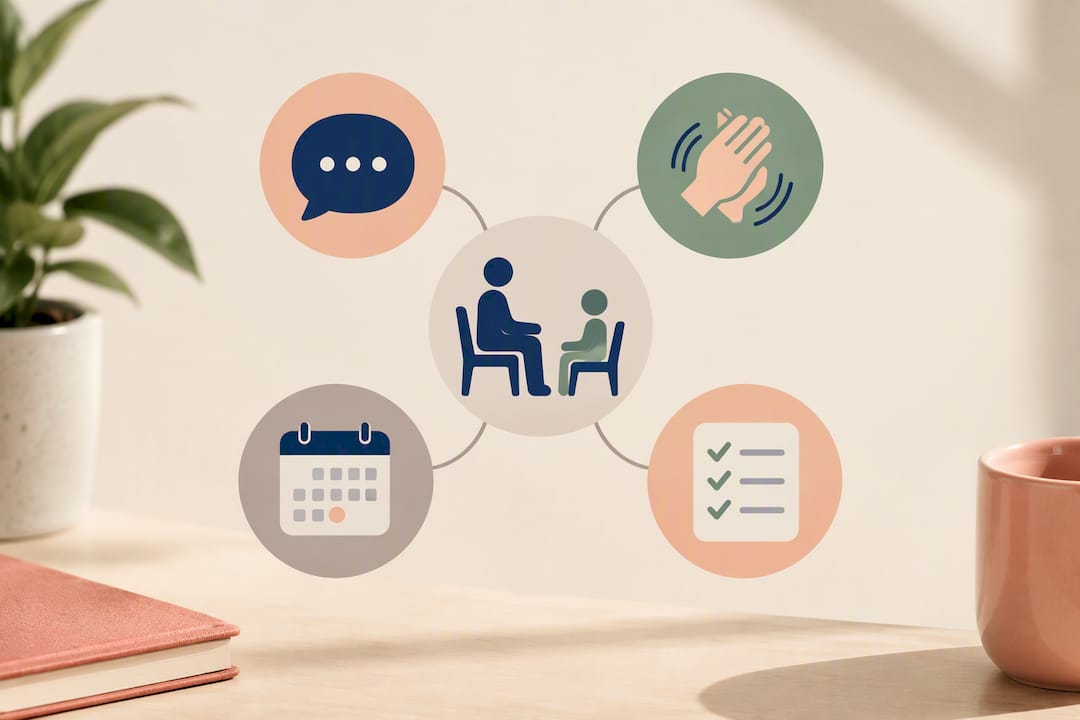
In practice, family involvement in therapy shows up in two distinct places: inside the therapy room and outside it.
In-session participation typically includes:
- Listening to your child describe their experience without interrupting or correcting
- Practicing communication exercises or role-plays the therapist assigns
- Working through a specific conflict with the therapist mediating in real time
- Attending joint sessions on a predictable schedule, not just when things escalate
At-home participation typically includes:
- Completing "homework" the therapist assigns, like a structured check-in conversation
- Reinforcing a skill your child learned in session, such as a calming technique before it's needed
- Adjusting the home environment in a small, specific way the therapist recommends
- Tracking a behavior or mood pattern so the next session has real data to work from
That homework piece deserves extra attention. According to the same PPE review, the difference between gains that stick and gains that fade often comes down to whether parents co-provide short, doable practice tasks at home, with the therapist checking in on how it went.
Pro Tip: Ask your therapist to define exactly one home task per week, not five. A single, specific action you'll actually follow through on beats a long list you'll quietly abandon by Wednesday.
One more point worth knowing: "family" doesn't have to mean biological parents. SAMHSA's guidance explicitly recommends including anyone the client identifies as significant, which can mean grandparents, stepparents, siblings, or a "family of choice" that has nothing to do with blood relation. If your child's most stabilizing relationship is with an aunt or a longtime family friend, that person belongs in the conversation about who participates.
How Parents Can Prepare for Family-Involved Sessions
Getting family involvement right isn't complicated, but it does benefit from a sequence. Here's a practical order of operations.
- Start the conversation early. Ask the therapist directly: "Should family be involved, and if so, who and how often?" Some providers default to individual-only work unless a parent raises the option, so don't assume it's already part of the plan.
- Clarify consent and privacy. Confirm what gets shared between individual and family sessions, and sign any necessary releases. Teens especially need to know what stays confidential, since that trust affects how honest they'll be later.
- Set concrete goals before the first joint session. Vague goals like "better communication" are harder to work toward than specific ones, like "reduce morning arguments about screen time."
- Complete the practical intake steps. Confirm scheduling that works for everyone, clarify who's expected to attend which sessions, and ask what kind of homework to expect.
- During sessions, speak for yourself, not for your child. Phrases like "I feel worried when..." land differently than "You never listen." The therapist will likely redirect blame-heavy language anyway, but coming in aware of it helps.
- Follow the therapist's prompts rather than steering the conversation. Parents who try to run the session usually get less out of it than parents who trust the structure.
- After each session, do the assigned practice within 48 hours. Waiting a week to try a new communication technique means you've likely forgotten the specifics.
- Keep a short log of what worked and what didn't. Even three bullet points before the next session gives the therapist something concrete to build on.
Pro Tip: If your child seems to shut down the moment family sessions start, ask the therapist about a brief individual check-in immediately before or after the joint session. That five-minute buffer often makes teens more willing to engage honestly in the room.
When Family Involvement in Therapy Isn't the Right Call
Family involvement helps most of the time, but not always, and a responsible provider will screen for this before inviting anyone into a joint session. SAMHSA's guidance is direct about the circumstances that make family-based approaches inadvisable, at least temporarily.
Situations that typically call for caution or a different approach first:
- Active intimate partner violence or ongoing abuse within the family
- A family member in acute withdrawal or actively intoxicated
- Severe, unmanaged psychiatric symptoms, including active suicidality or psychosis
- A history where joint sessions have previously escalated conflict or retraumatized someone in the room
Screening for these factors is standard, not a sign your provider is being overly cautious. It usually involves individual conversations with each family member, a review of safety history, and a clear discussion about confidentiality before anyone sits down together. Signed releases matter here too, since they define exactly what information moves between individual and joint sessions.
When family sessions aren't advisable right away, that doesn't mean family involvement is off the table permanently. A staged approach, individual sessions first, then separate parent sessions, then joint meetings once safety is established, lets a therapist screen for dynamics that would otherwise derail things. Community resources for families affected by substance use can also fill the gap while direct joint sessions wait.
What Good Family Therapists Do (and What Formats to Expect)
A qualitative review of family members' own perspectives on family therapy identified specific therapist qualities that families consistently rated as helpful, and a few that reliably backfire.
What families found helpful:
- Warmth and genuine neutrality, rather than visibly favoring one family member's version of events
- Building rapport with each person individually before wading into active conflict
- Tailoring the approach to the family's actual situation instead of running a generic script
- Coordinating with outside supports like schools, which families in the review specifically appreciated
What tends to backfire, according to the same review, includes pushing someone to share before they're ready and any sense that the therapist has picked a side.
Common formats you'll encounter include structural and systemic family therapy, which focus on family roles and communication patterns, functional family therapy (often used with adolescents showing behavioral issues), and straightforward psychoeducation sessions that teach families about a diagnosis and how to respond to it. Cleveland Clinic's overview notes that sessions can run short-term (a handful of sessions focused on a specific issue) or longer-term, depending on what's being addressed. Some programs also use multi-family groups, where several families work together, which can normalize a struggle that felt isolating. Telehealth has made attendance easier for families juggling multiple schedules, though it does require a private, distraction-free space on both ends of the call. For more on setting expectations around rapport and limits, Kin-wellness's guide to family therapy boundaries walks through how therapists typically structure that first stretch of sessions.
How Kin-wellness Approaches Family-Involved Care
Kin-wellness provides virtual outpatient mental health care for adults across California, including individual, group, and family therapy, medication management, and structured intensive outpatient programming. Family therapy is built into both the outpatient and IOP tracks rather than treated as an add-on, which matters given how strongly attendance correlated with completion in the telehealth IOP data cited earlier.
In practice, that means preparing both the client and family members before joint sessions start: clarifying confidentiality boundaries, setting realistic goals, and establishing telehealth etiquette so sessions run smoothly from a home environment. Parents exploring options for themselves alongside a family member's care can also find practical starting points in Kin-wellness's guide for parents seeking therapy, which covers how to weigh format, frequency, and fit before booking anything.
What Parents Get Wrong About Family Involvement
Most advice on this topic treats family involvement like a box to check once, a single "family session" tucked into an otherwise individual treatment plan. The data doesn't support that. The per-session odds increase from the telehealth IOP study tells you this is dose-dependent. One session helps a little. Consistent attendance helps a lot.
The bigger gap I see is parents waiting to be invited. If you want in, ask. Don't assume silence means it's not appropriate for your situation.
I'd also push back gently on the instinct to treat family sessions as a place to fix your child. The families who report the best experiences show up to listen and speak for themselves, not to relitigate who's right. That's uncomfortable advice for a parent who came in with a clear diagnosis of what's wrong. It's also the version that actually works.
Start smaller than you think you need to. One honest conversation with the therapist about your role beats a grand plan you can't sustain past week three.
— Dakota
Getting Started with Family-Involved Care at Kin-wellness
Some providers offer individual therapy, family sessions, and medication management together under one virtual roof for adults in California, which can reduce scheduling friction and help families attend the family therapy portion more consistently.
Kin-wellness offers virtual intensive outpatient programming, medication management, and aftercare planning, alongside individual, group, and family therapy sessions delivered by licensed clinicians. Every session happens over telehealth, and the clinical team works with most major insurance plans, so cost questions get answered early rather than after you've already committed to a schedule.
If you're weighing whether to bring family into your own care or your child's, the simplest next step is to ask directly at intake. Reach out through Kin-wellness's services page to inquire about scheduling and to ask specifically about staged family involvement or parent coaching options. It costs nothing to ask what a first family session would look like.
Primary Sources and Further Reading
The claims in this article draw from published clinical research and federal guidance, not general advice blogs.
- TIP 39: Substance Use Disorder Treatment and Family Therapy, SAMHSA's advisory on screening criteria, benefits, and who to include in family-based care.
- The Impact of Family Therapy Participation on Youths and Young Adult Engagement and Retention in a Telehealth Intensive Outpatient Program, the quality improvement analysis behind the retention and completion figures above.
- A Review of Parent Participation Engagement in Child and Family Mental Health Treatment, the source for PPE's definition and cross-disorder evidence.
- Client Perspectives of Family Therapy: A Qualitative Systematic Review, covering what families themselves say helps and hurts.
- Cleveland Clinic's overview of family therapy types and formats.
Every family's situation carries its own history and risk factors, so treat this as background for a conversation with your provider, not a substitute for one.
Sources
- The Impact of Family Therapy Participation on Youths and Young Adult Engagement and Retention in a Telehealth Intensive Outpatient Program: Quality Improvement Analysis
- Family Therapy: What It Is, Techniques & Types
FAQ
How do you involve parents in therapy?
Start by asking the therapist directly whether family sessions fit your child's treatment plan, then clarify consent, confidentiality, and expected home tasks before the first joint meeting. Ongoing involvement usually means attending scheduled sessions and following through on short practice assignments between them, since the telehealth IOP data shows benefits scale with how many sessions a family attends.
What is the "2 year rule" in therapy?
There isn't an established clinical standard called the "2 year rule" in the research behind this article, and definitions of it vary widely depending on where you encounter the term. Ask your specific provider what timeline they're referencing if you've heard this phrase, since it isn't a recognized element of family involvement research.
What are the main principles of family therapy?
Family therapy generally treats the family as an interconnected system rather than focusing on one person's symptoms in isolation, which is why therapists work to build simultaneous rapport with each member rather than siding with one. Core elements include neutrality, tailoring the approach to each family's dynamics, teaching communication skills, and, per SAMHSA guidance, screening for safety before joint sessions begin.
What is an example of family involvement in therapy?
A common example is a parent attending a scheduled joint session where the therapist facilitates a specific communication exercise, then the family practices a related task at home before the next appointment. Another example is a multi-family psychoeducation group, where several families learn about a diagnosis together and share strategies for supporting a loved one.
Does Kin-wellness offer family therapy sessions?
Yes, Kin-wellness includes individual, group, and family therapy as part of its virtual outpatient services for adults in California. Family sessions can be incorporated into intensive outpatient programming or standalone outpatient care, depending on what a client's treatment plan calls for.