
California workers can take protected time off for qualifying mental health treatment. Multiple legal routes exist depending on your employer's size and your work history, and you do not need to disclose a specific diagnosis to use most of them.
Your main options at a glance:
- CFRA (California Family Rights Act): job-protected leave per year for a serious health condition available to employees meeting duration and hours requirements; employers with 5+ employees
- FMLA (federal): similar protection, but applies only to employers with larger employee thresholds
- California paid sick leave: at least 40 hours (five days) of paid sick leave per year for diagnosis, treatment, or preventive mental health care; covers most workers after 30 days on the job
- Labor Code §230.1: leave for psychological counseling if you are a victim of crime or abuse; applies to employers with 25+ employees
- ADA/FEHA accommodations: schedule changes, remote work, or modified duties when a condition limits a major life activity
- State Disability Insurance (SDI): partial wage replacement when a licensed provider certifies you cannot work; does not itself provide job protection
Fast next steps:
- Contact your treating provider and ask for a certification note stating a serious health condition and the need for ongoing treatment.
- Review your employer's leave policy and check which laws apply based on company size.
- Notify HR in writing: "I am requesting leave under CFRA/FMLA for a serious health condition. My provider will supply certification."
- Keep dated copies of every communication.
Pro Tip: Frame your request around a "serious health condition" rather than asking for "mental health days." That language aligns with how clinicians document and how HR processes claims, and it avoids the ambiguity of informal terms like "stress leave," which has no standalone legal status in California.
Table of Contents
- What happens after you submit a leave request?
- What if your employer is too small for CFRA or FMLA?
- How leave interacts with your vacation and personal time
- Kin-wellness supports your care from the first appointment
What happens after you submit a leave request?
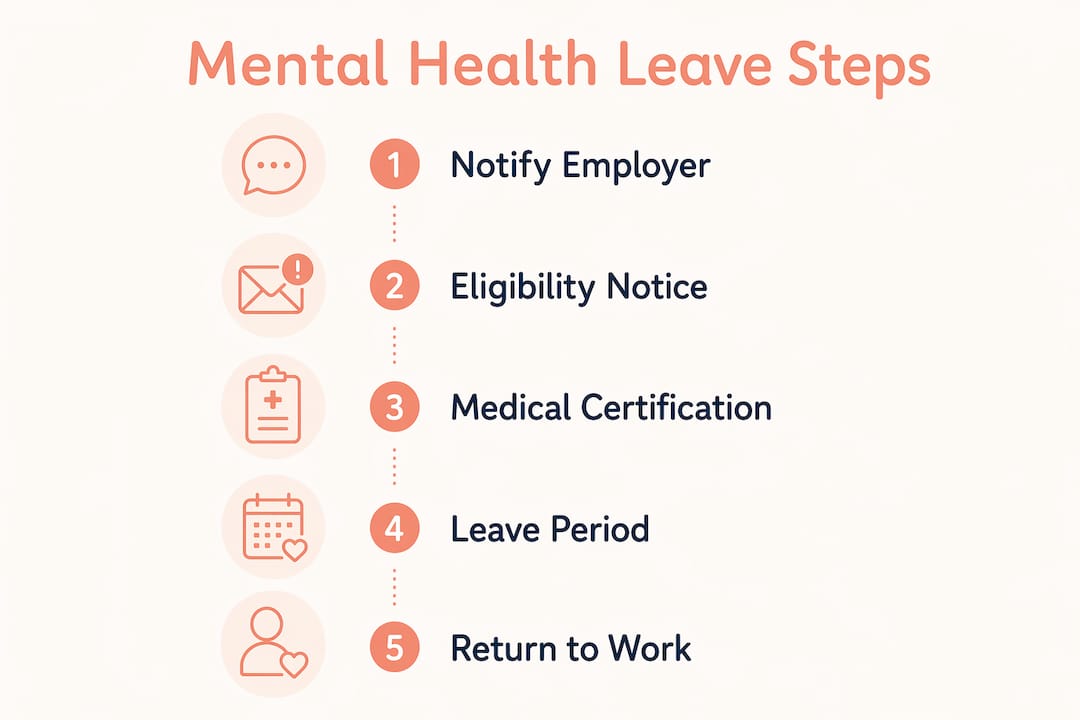
Once you notify your employer, the clock starts. Under CFRA and FMLA, employers must provide a Notice of Eligibility within five business days. If you are eligible, they then send a Designation Notice confirming whether the leave qualifies. Your provider typically has 15 calendar days to return a completed certification form. Employers cannot require more medical detail than the certification asks for, and your diagnosis stays private — your clinician confirms a serious health condition exists, not what it is. Once leave is designated, your job and benefits are protected for the approved period. Health, dental, and vision coverage continues under the same employer-contribution terms during CFRA/FMLA leave.
What if your employer is too small for CFRA or FMLA?
Small employers — fewer than five employees for CFRA, fewer than 50 for FMLA — are not off the hook entirely. California paid sick leave still applies to nearly every employer and provides at least 40 hours (five days) per year, covering short therapy visits without requiring advance certification. FEHA's reasonable accommodation rules apply to employers with five or more employees, so schedule adjustments or a temporary reduced schedule may still be available. If you are a crime or abuse survivor, Labor Code §230.1 covers employers with 25 or more employees. SDI can replace a portion of wages regardless of employer size, as long as you have contributed to the program. An employment attorney can identify which protections actually apply to your specific situation.

How leave interacts with your vacation and personal time
Many employers require — or allow — you to use accrued vacation or personal leave concurrently with CFRA/FMLA leave. Running them together does not extend your total protected time, but it keeps a paycheck coming while job protection is in place. Paid sick leave, however, cannot be forced to run concurrently with unpaid CFRA leave in most cases — you choose when to use it. Check your employer's written policy before assuming; the rules vary, and getting this wrong can cost you paid days you were entitled to keep.
Kin-wellness supports your care from the first appointment
Taking leave is only half the equation. Getting the right clinical care, quickly, is the other half. Kin-wellness provides outpatient and intensive outpatient services — individual therapy, group therapy, EMDR, medication management, and telehealth — designed for working professionals, parents, executives, and healthcare workers who need flexible scheduling around their work and leave timelines. Clinicians at Kin-wellness can provide the treatment documentation many employers require as part of the certification process, and the team supports insurance billing for PPO and HMO plans as well as private pay. Your medical information stays confidential under HIPAA throughout. Ready to get started? Visit Kin-wellness or call to schedule an intake — most clients are seen within days, not weeks.
This article is general information, not legal or medical advice. Confirm current rules with the California Civil Rights Department, the EDD, or a qualified employment attorney for your specific situation.